
This report provides a comprehensive overview of recent key developments, investigations, and regulatory actions by the Brazilian Administrative Council for Economic Defense (CADE).
It covers leadership transitions, trends in merger filings, antitrust inquiries into Standard Essential Patents (SEPs), digital market regulation, and ongoing investigations into major technology companies. The report also highlights CADE’s enforcement measures against cartels, collusive practices, and alleged anticompetitive exchanges of information across various sectors, reflecting CADE’s commitment to strengthening competition law enforcement and adapting to the challenges of digital markets.
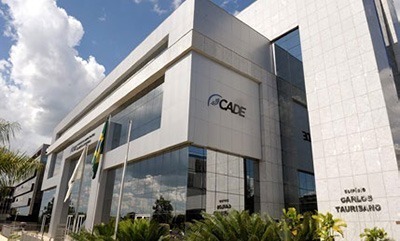
CADE set to have a new president
On July 10, 2025, CADE will go through a leadership change. The current president, Mr. Alexandre Cordeiro Macedo, will conclude his term, and Commissioner Gustavo Augusto Freitas de Lima, the most senior member of the Tribunal, will assume the presidency on an interim basis until a new president is officially appointed.
According to CADE’s bylaws, the President of Brazil must appoint a new president, which the Federal Senate must approve. The term of office is four years, with the possibility of one reappointment. In the event of a vacancy, the most senior sitting commissioner temporarily assumes the role until a new president is confirmed through the formal process. [1]

Merger cases
CADE sees a 25% increase in merger filings in Q1 2025
In the first quarter of 2025, CADE received 174 merger filings—a 25% year-over-year increase from 139 filings in 2024. The sectors leading the filings were energy (30), industry (26), and agribusiness (15). In contrast, the top sectors in 2024 were real estate development, retail, and fuels.
In 2025, CADE’S General Superintendence has already challenged two merger cases before CADE’s Tribunal – in the health insurance and pharmaceutical sectors – and recommended their denial.[2][3]
2024 merger cases stats:

Gun jumping
In 2024, CADE’s Tribunal ruled on 17 gun jumping cases (when a transaction is concluded in advance of CADE’s authorization), which amounts to a 112.5% year-over-year increase. In 2025, however, CADE’s Tribunal has only ruled on one case, which involves the automotive sector.[5]
CADE sets limit for gun jumping fines: An investigation initiated in 2019 involved the purchase and sale of tangible and intangible assets between Govesa Motors Veículos and Kuruma Veículos without CADE’s prior approval. In May 2024, CADE settled with the companies, which were fined BRL 2.4 million. This consolidated a critical understanding of the Tribunal, determining that gun jumping fines respect the maximum limit of 20% of the (updated) value of the transaction, except in cases of willful misconduct by the parties involved.[6]
Non-reportable transactions involving digital markets
CADE may request the filing of any transaction that does not meet the mandatory filing thresholds within one year from its closing date.
Within this scope, in August 2024, CADE’s General Superintendence opened three investigations into big techs acquiring artificial intelligence startups (acquisitions of Anthropic by Amazon, Mistral AI by Microsoft, and Character AI by Google).[7]
These investigations reflect CADE’s concern to ensure that acquisitions by big techs do not compromise competition and innovation in the AI sector. The initiation of proceedings allows for a detailed analysis of the potential impacts of these transactions on the market.

CADE’s investigation regarding Standard Essential Patents
On April 23, 2025, CADE ordered the opening of an administrative inquiry into Ericsson to investigate the alleged infringement of antitrust law regarding Standard Essential Patents (“SEPs”).
This order followed an appeal filed by Lenovo and Motorola against CADE’s General Superintendence’s decision to deny a request for a preventive measure to replace the preliminary injunction previously granted in favor of Ericsson regarding the termination of alleged infringements of SEPs deemed essential to 5G wireless telecommunications networks.
Lenovo previously alleged that Ericsson’s conduct could produce anticompetitive effects in the mobile device market and requested a preventive measure to bar the enforcement of the patents in Brazil. In its response, Ericsson argued that the matter constituted a private dispute with no anticompetitive implications, asserting the legitimacy of its judicial actions and its global licensing model. Subsequently, the parties entered into a global licensing agreement, which led to the withdrawal of the appeal.
Nevertheless, Commissioner Gustavo Augusto Freitas de Lima, supported by CADE’s Tribunal, ordered the conversion of the preparatory proceeding into a formal administrative inquiry, emphasizing the need to investigate potential anticompetitive effects arising from the exercise of intellectual property rights, including the imposition of abusive conditions, discriminatory practices, and possible abuse of dominant position, regardless of the existence of direct competition between the parties[8]. As of now, the administrative inquiry is under review by CADE’s General Superintendence.
In addition to this case, SEPs are a hot topic in Brazil. The Interministerial Intellectual Property Group has established a working group dedicated to this topic, recognizing the need for greater regulatory clarity and technical training on SEPs. The group has also requested a study from CADE’s Department of Economic Studies on the competitive impacts of patents that are essential or deemed essential to industry standards and whose patent holders voluntarily contribute to such standards.

Developments in the digital markets regulation
On October 10, 2024, the Ministry of Finance (“MF”) published a report on competition issues involving digital platforms.
The report results from a public consultation (SRE/MF Call for Contributions No. 01/2024) carried out by the MF in early 2024, which received 301 contributions from 72 participants, including several companies and foreign authorities.
Among the competition concerns raised in the consultation and included in the report are exclusivity and self-preferencing practices, abusive price charging to enter digital ecosystems, excessive prices charged due to a monopolist position, killer acquisitions, and leverage practices.
Among the many regulatory changes suggested by the MF, the following stand out:
- Designating CADE as the competent authority to regulate digital platform activities; and
- Creating a procedure for CADE to designate systemically significant digital platforms (similar to the “gatekeeper” concept adopted in the European jurisdiction through the Digital Markets Act).
Once it is designated, such digital platform would be subject to a series of procedural and transparency obligations that CADE must establish on a case-by-case basis, such as:
- Prior notification of mergers;
- Commercial information transparency rules for end users and professionals regarding the use and offer of services and products; and
- Duty to inform end users and professionals of changes to the terms of use or services offered.
The creation of a specialized CADE unit was also suggested to monitor and address issues relating to digital markets and to implement substantial obligations in cooperation with other regulators, such as the National Telecommunications Agency (ANATEL) and the Brazilian National Data Protection Authority (ANPD), when necessary, depending on specific technical and sectoral aspects.
On May 20, 2025, the Brazilian Congress held a public hearing to examine the Digital Platforms Bill (Bill No. 2.768/2022), prompted by a request filed in late 2024. The session focused on a Latin American Internet Association (ALAI) study that raised significant concerns about the bill’s design and potential consequences. The most debated issues were the financial threshold for classifying digital platforms as gatekeepers, the economic consequences of the proposed inspection fees, the designation of the competent regulatory authority, and the risks to legal certainty in Brazil.
Although Bill No. 2.768/2022 proposes ANATEL as the regulatory authority for digital platforms, many participants favored CADE, citing its competition law and digital markets expertise. However, a comparative study raised concerns about legal certainty, warning that the bill might lead to conflicting decisions between regulatory bodies, which would increase judicial disputes and reduce certainty.
Another key issue was the BRL 70 million annual turnover threshold for identifying gatekeepers established by the bill, which was deemed overly broad and imprecise. As such, it would potentially apply to hundreds of platforms, thus diluting its regulatory efficiency.
The hearing also discussed the importance of establishing a regulatory framework tailored to Brazil’s digital ecosystem, rather than copying international models like the European Digital Markets Act. Participants criticized the bill’s vague platform classification, lack of evidence for market failure, overreach in regulatory powers, and insufficient due process protections. Feedback on the draft under review by the MF highlighted the need for clearer definitions, institutional safeguards, and a more balanced approach.

Google and Apple in CADE’s sights
On November 25, 2024, CADE converted an investigation into Apple in progress since December 2022 into an administrative proceeding. CADE decided to impose a provisional measure against Apple, forcing the company to refrain from enforcing certain clauses in the Apple Developer Program License Agreement and the App Store Review Guidelines. These clauses required, among other provisions, the mandatory use of Apple’s payment processing system for in-app purchases, i.e., within applications (in which Apple demands up to 30% commission on the amounts transacted by users on the platform). As a result, users and apps were allowed to use other forms of transaction processing in addition to the Apple Store.
Recently, CADE succeeded in reinstating this provisional measure through a court ruling. The Federal Regional Court of the 1st Region granted Apple 90 days to adjust its payment system and open it to new developers. The ruling was supported by the Office of the Attorney General (AGU), through the Specialized Federal Prosecutor’s Office (PFE/CADE) and the Regional Federal Prosecutor’s Office of the 1st Region (PRF1). According to CADE, Apple’s practices restrict developers’ liberty to choose payment systems and distribute their products within the iOS ecosystem, potentially constituting an abuse of dominant position.[9]
The following week, CADE opened an administrative investigation into Google to investigate the same payment processing limitations in Google Play for in-app purchases. According to CADE, Google had been adopting measures similar to those adopted by Apple, which justified an investigation to ascertain the extent of these measures that could be classified as competitive violations.
Both investigations unfolded against the same backdrop as the widely known battle waged by Epic Games (developer of the game Fortnite) against Google and Apple in the U.S. courts. Epic Games is contesting the mandatory use of Apple and Google’s payment processing system for in-app purchases and the fees inherent in processing payments on these platforms.
In the U.S., despite prevailing in court against Google, which was forced to adopt remedies relating to the distribution of applications for the Android operating system and billing services for transactions carried out within applications, Epic Games was not as successful in its case against Apple. In that case, the market definition adopted by the jury was significantly more favorable to Apple, and the body of evidence on the case record and the specifics of Apple’s closed operating model (not open source) benefited Apple, whether actively or passively.

CADE’s preventive measures and their continued effectiveness
In recent sessions held during the first semester of 2025, CADE has consistently upheld preventive measures imposed by CADE’s General Superintendence, despite appeals filed by the affected parties. On May 14, 2025, during its 247th Ordinary Ruling Session, CADE denied an appeal filed by Apple Inc., which sought to overturn a preventive measure requiring the company to cease potentially anticompetitive practices in the iOS app distribution market. The measure, prompted by complaints from Mercado Livre and Mercado Pago, imposed a daily fine of BRL 250,000.00 for non-compliance. The complainants allege that Apple enforces restrictive in-app purchase policies that hinder market entry by competitors, thereby potentially constituting an abuse of dominant position.[10]
Additionally, in the same May 14 Session, CADE denied an appeal by UBEM, maintaining a preventive measure that mandates the cessation of practices deemed potentially anticompetitive in the music copyright licensing market. The investigation, initiated upon a complaint by Sistema Brasileiro de Televisão (“SBT”), centers on allegations that UBEM coordinated uniform commercial practices among its members, including standardized pricing and contractual terms. The upheld measure includes a daily fine of BRL 50,000.00 for non-compliance.[11]
In a separate case adjudicated on March 19, 2025, CADE partially granted an appeal by CA Investment (Brazil) S.A., a minority shareholder in Eldorado Brasil Celulose S.A., in an investigation concerning the alleged creation of difficulties for a competitor. CADE’s General Superintendence had previously imposed a preventive measure suspending CA Investment’s political rights within Eldorado, following allegations that the company used its veto powers to obstruct the firm’s operations. While CADE acknowledged the potential for anticompetitive harm, it modified the measure only to reinstate all political rights except those veto powers that could undermine the expansion of Eldorado’s production capacity.[12]

Investigations involving the exchange of competitively sensitive information
In 2024, CADE significantly intensified its scrutiny of the exchange of competitively sensitive information, launching several high-profile investigations involving both multinational and major Brazilian companies.
- In July 2024, CADE’s General Superintendence initiated an investigation into the alleged exchange of competitively sensitive information in the international light motor vehicle market. A leniency agreement triggered this case, which targets prominent automakers including Audi, BMW, Porsche, Mercedes-Benz, and Volkswagen AG, along with 23 individuals. The investigation is still in progress.
- In September 2024, CADE’s General Superintendence opened an administrative proceeding to investigate potential anticompetitive conduct in the Brazilian forklift market. The case involves 11 companies, and several individuals accused of systematically exchanging sensitive information, submitting cover bids, and entering into no-poach agreements—arrangements not to hire each other’s employees. This investigation also originated from a leniency agreement and remains active.
- CADE also revisited labor market cases with a revamped focus on human resources groups. The first of these investigations, launched in October 2020, centers on “MedTech,” a benchmarking group composed of healthcare companies. Members of MedTech’s HR departments allegedly engaged in systematic exchanges of sensitive information regarding salaries, raises, and employee benefits.
In August 2024, CADE’s General Superintendence launched two additional administrative inquiries into human resources practices, which were converted into formal proceedings by October 2024. In its decision to open the investigations, CADE’ General Superintendence emphasized that the frequent exchange of recent or future-sensitive information can constitute an undue exchange of competitively sensitive information. CADE’s General Superintendence also noted that, under the circumstances, it would be reasonable to presume that such exchanges were illegal.
These developments underscore the need for heightened caution, particularly given the legal uncertainty surrounding benchmarking practices among HR departments.

Collusive conduct
Between 2019 and 2024, CADE entered into 25 leniency agreements, of which it has only ruled on one. This indicates a substantial backlog of investigations still underway or not initiated. In 2024, CADE only ruled on two administrative proceedings arising from leniency agreements:
- A Brazilian market cartel for residential water consumption meters (hydrometers or water meters); and[13]
- A cartel in the tender for the urbanization of favelas in Rio de Janeiro (“PAC Favelas“).[14]
In this regard, CADE’s General Superintendence formed a new working group to collect contributions from the antitrust community to improve CADE’s Leniency Program. CADE held six meetings in 2024, with around 100 participants, and received contributions by January 2025.[15]
In 2024, CADE’s Tribunal tried 17 administrative cases involving cartels. Eight of these cases resulted in partial convictions, while four were dismissed.
- One of the convictions imposed by CADE’s Tribunal involved the salt cartel, whose coordination between salt producers and refiners allegedly affected the entire production chain in Brazil from 1992 to 2002. Considered a hardcore cartel, it relied on various monitoring mechanisms, especially concerning prices and penalties for non-compliance with agreements. One of the administrative proceedings, initiated in January 2019 following the dismemberment of the original 2008 case, involved the company Ciemarsal and three individuals who were convicted in December 2024. The total amount of fines imposed was BRL 1.5 million.[16]
- In August 2024, CADE’s Tribunal convicted a Showa Corporation manager of participating in a cartel in the electric power steering (EPS) market.[17] The investigation initiated in 2016 and revealed that companies such as NSK Brasil Ltda., TRW Automotive, and others exchanged sensitive information and adjusted prices and commercial conditions between 2007 and 2011. The manager was fined approximately BRL 106,000.00, but the case against two other individuals was dismissed for lack of evidence.
In 2025, CADE’s Tribunal ruled on four administrative cases involving cartels in the following markets: Transportation, energy, color picture tubes (CPTs), and engineering services.[18][19][20][21]

CADE increases the number of searches and seizures in cases involving cartels in public tenders
In 2024, CADE intensified its actions to combat cartels in public tenders, carrying out operations in partnership with other agencies.
- In November 2024, CADE and the Public Prosecution Office of Rio Grande do Sul (MPRS) carried out “Operation Chameleon,” which aimed to dismantle a cartel scheme and that committed fraud in public tenders in the south of Brazil. The operation involved 30 search and seizure warrants executed in companies and residences in Rio Grande do Sul and Paraná to investigate fraud totaling BRL 460 million.[22]
- The following month, CADE, the Brazilian Office of the Comptroller-General (CGU) and the Federal Highway Police (PRF) launched an operation to investigate an alleged cartel in tenders for highway engineering works, with contracts totaling almost BRL 9 billion. The action involved search and seizure warrants executed at several construction companies in Goiás, Minas Gerais, Tocantins, Pará and Maranhão.[23]
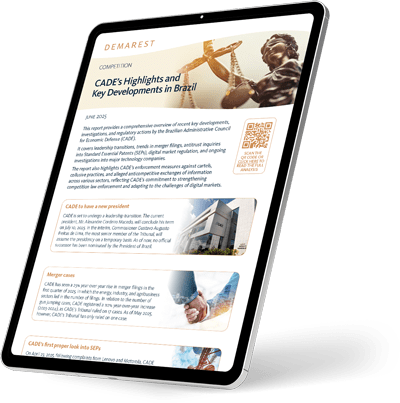
Click here or on the image below to download the summarized version of this publication.
[1]Available here. Last Access: June 04, 2025.
[2]Transactions notified to CADE increase 25% in Q1 2025. Available here. Last Access: May 29, 2025.
[3]Merger No. 08700.009192/2024-10 and Merger No. 08700.010436/2024-15.
[4]Available here. Last Access: January 28, 2025.
[5]APAC No 08700.000974/2020-60.
[6]APAC No. 08700.005463/2019-09.
[7]APACS Nos 08700.005962/2024-55, 08700.005961/2024-19 and 08700.005638/2024-37.
[8]Rapporteur Vote. Commissioner Gustavo Augusto Freitas de Lima. Appeal No. 08700.010219/2024-17. Doc. SEI No. 1554055.
[9]Available here. Last Access in: June 4, 2025.
[10]Administrative Proceeding No. 08700.009531/2022-04.
[11]Administrative Proceeding No. 08700.008710/2024-88.
[12]Administrative Inquiry No. 08700.007664/2024-08.
[13]Administrative Proceeding No. 08700.009165/2015-56.
[14]Administrative Proceeding No. 08700.007776/2016-41.
[15]Available here. Last Access: January 28, 2025.
[16]Administrative Proceeding No. 08700.000556/2019-39.
[17]Administrative Proceeding No. 08700.002070/2019-35.
[18]Administrative Proceeding No. 08700.005876/2019-85.
[19]Administrative Proceeding No. 08700.006377/2016-62.
[20]Administrative Proceeding No. 08700.010731/2013-00.
[21]Administrative Proceeding No. 08700.002247/2015-70.