The Agribusiness Newsletter brings information and news about the main regulations and legal texts relating to the regulation of agribusiness in Brazil. This initiative seeks to cover the agribusiness industry on its transactional, litigation, tax and regulatory levels, and is an invitation for all of those working in this market to both access important news and comments on vital topics from the sector.
This material is for informative purposes only, and should not be used for decision-making. Specific legal advice can be provided by our legal team.
NEWS

CVM Agribusiness Newsletter FIAGRO and CRA have boosted agribusiness on the capital markets over the last two years
In the last two years, Brazilian agribusiness has benefited significantly from the expansion of the capital markets, driven mainly by Investment Funds in Agroindustrial Productive Chains (“FIAGRO”) and Agribusiness Receivables Certificates (“CRA”).
The tenth edition of the CVM Agribusiness Newsletter, for March 2025, offers a solid overview of the evolution of financial instruments linked to the agribusiness sector in the capital markets. The report highlights the significant growth of FIAGRO and CRA, which have been increasingly prominent as financing alternatives for Brazilian agribusiness.
Capital markets have grown by 16.1% in the last two years, from BRL 13.75 trillion in March 2023 to BRL 16 trillion in March 2025.
FIAGRO’s surge in value was much higher than the average: the funds’ net worth escalated 204%, from BRL 14.7 billion to BRL 44.7 billion in the same period. The CRA market, on the other hand, increased by 42%, reaching BRL 156 billion in backed credit rights.
The composition of FIAGRO’s portfolios illustrates the predominance of securitization assets, since Real Estate Receivables Certificates and CRA represent 49% of investments, amounting to BRL 13 billion.
In the case of Credit Rights Investment Funds (“FIAGRO-FIDC”), credit rights (such as Rural Product Notes and Agribusiness Credit Rights Certificates) are the main assets, accounting for 67% of the portfolio.
In March 2025, there were 145 operational FIAGRO funds, a 42% increase compared to the previous year. The FIAGRO-FIDC category leads in number of funds, accounting for 48% of the total. FIAGRO’s Real Estate Investment Funds (“FIAGRO-FII”) account for 44% of the industry’s net assets, which total BRL 47.7 billion. Most funds (67%) encompass between 2,000 and 5,000 shareholders, and 12 already exceed 15,000 investors.
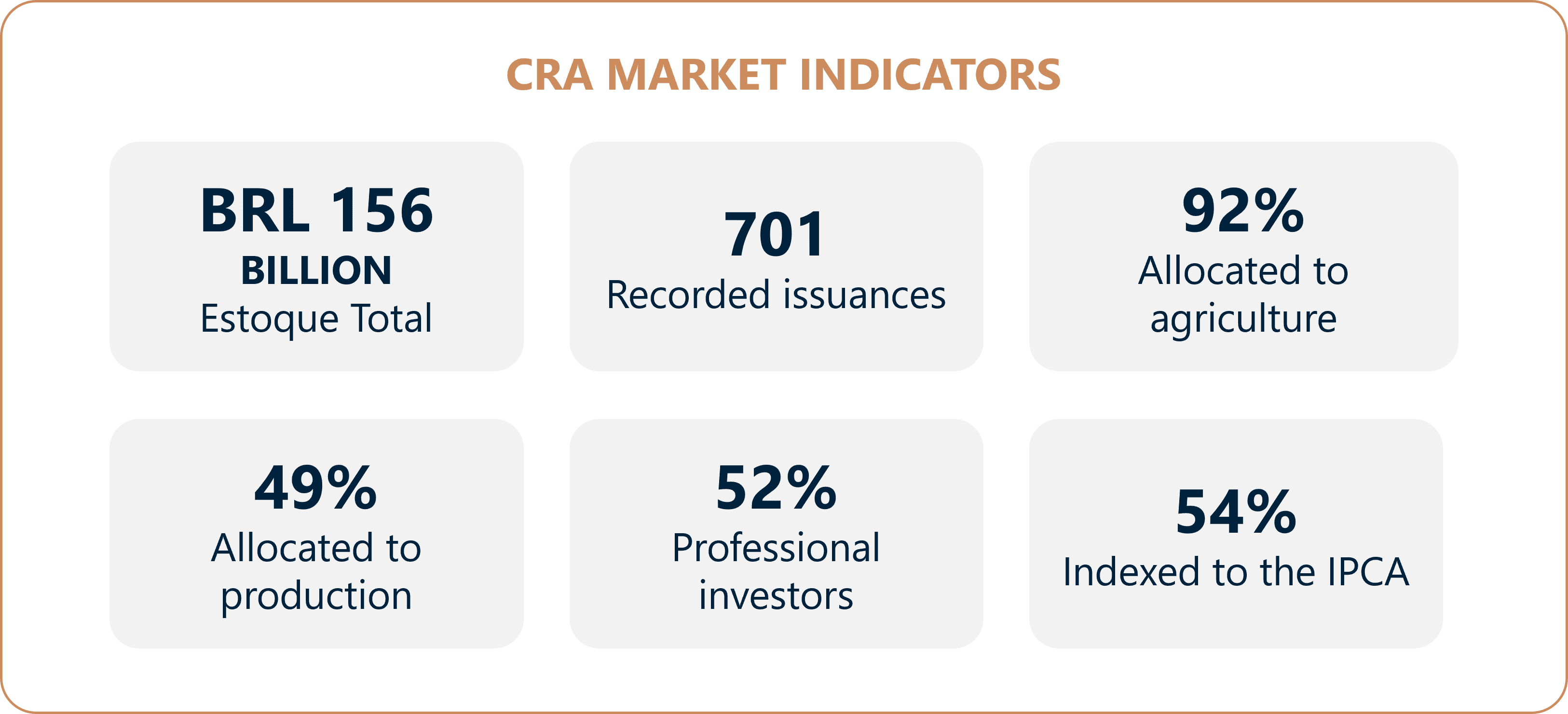
In the CRA segment, the stock of credit rights reached BRL 156 billion, with 701 registered issuances. Most of the funds (92%) finance agricultural products, and 49% are allocated to production, especially grains and livestock. Rural producers are the primary beneficiaries, obtaining 50% of the funds.
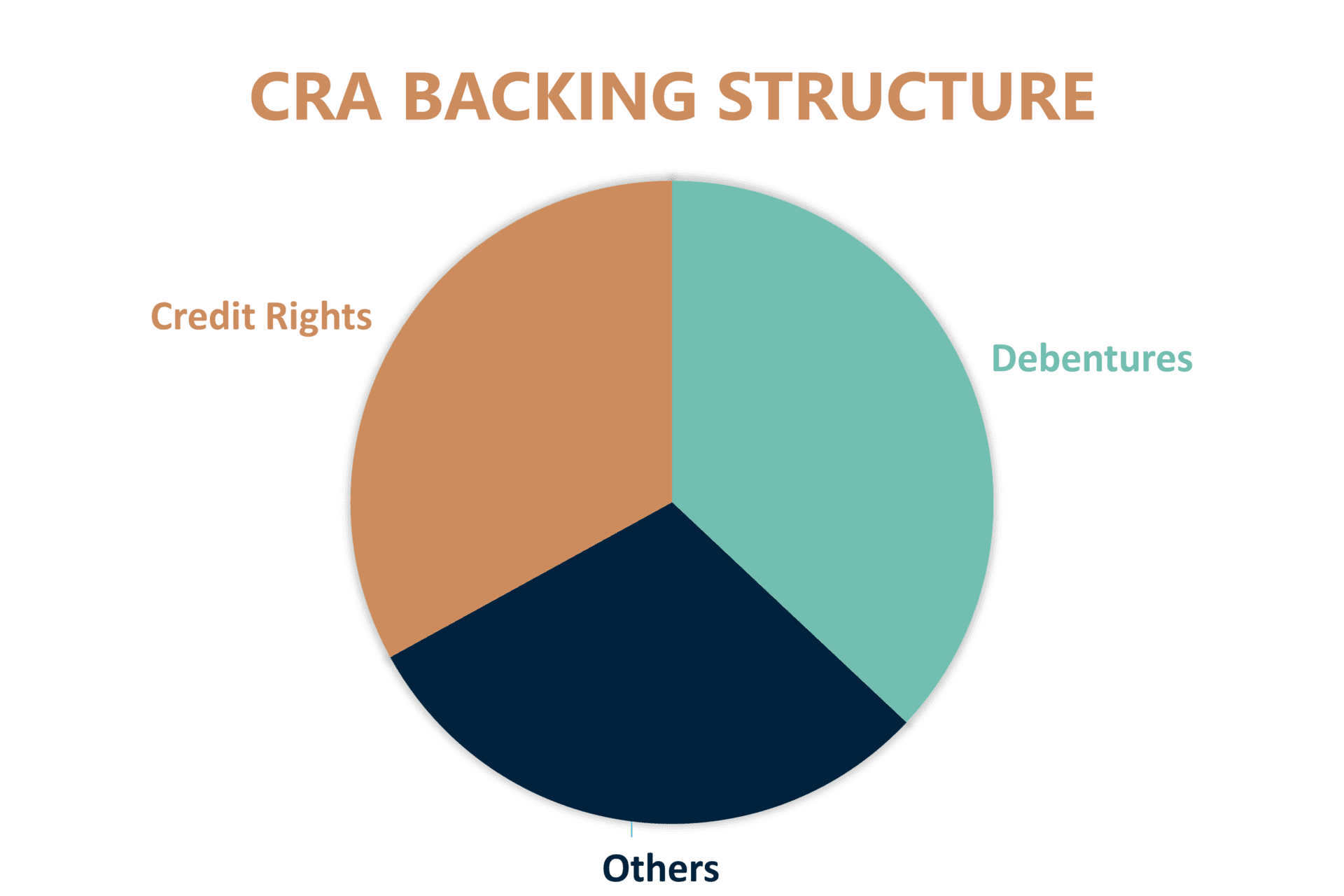
Debentures are the main backing instrument for CRAs, representing BRL 57.8 billion (37% of the total). Credit rights follow with BRL 51.4 billion (33%). Most issuances (52%) are aimed at professional investors, and the Broad Consumer Price Index (“IPCA”) is the most commonly used remuneration index (54%).
The newsletter also provides data on public offerings registered under the automatic procedure. In March 2025, 4 CRA offerings, 11 FIAGRO-FIDC offerings, 4 FIAGRO-FII offerings, and 1 FIAGRO-FIP offering were registered. The total amount registered in FIAGRO-FIDC offerings in the previous quarter was BRL 603 million.
The work of the Brazilian Securities Exchange Commission (“CVM”) has been decisive in this progress. It has implemented regulatory adjustments that favor transparency, governance, and legal certainty in operations and encourage financial innovation. This initiative to bring agribusiness and the capital markets closer together represents an important step towards modernizing the sector. By diversifying its sources of financing and attracting private capital, Brazilian agribusiness strengthens its resilience to economic and climatic challenges and increases its competitiveness on the global stage.
For more information: FIAGRO and CRA have boosted agribusiness on the capital markets over the last two years and CVM Agribusiness Newsletter:10/2025 Edition
Federal Government changes income tax regulations
On June 11, 2025, the Federal Government published Provisional Measure No. 1.303/25, which changed the taxation of financial investments and virtual assets in Brazil (including agribusiness financial assets – Agribusiness Credit Letter [“LCA”], CRA, Active Debt Certificate, Agricultural Warrant [“WA”], Rural Product Note, FII, and FIAGRO, among others).
The provisional measure also increased the income tax rate on interest on equity, changed the rules for the Social Contribution on Net Profit for financial institutions, increased the taxation of Brazilian betting companies, and changed the rules for offsetting tax credits. Details on these changes can be found in our Client Alert.
National Congress reinstates previous IOF regulations
On June 27, 2025, the National Congress published Legislative Decree No. 176/25, which suspended Decrees No. 12,466/25, No. 12,467/25 and No. 12,499/25 published between May and June, increasing the Credit, Exchange and Insurance rates of the Exchange Tax on Financial Operations (“IOF”). Once these effects were suspended, the wording of Decree No. 6.306/07, which was in force before the changes brought about by the decrees mentioned above, was reinstated. Details on these changes can be found in our Client Alert.
Congress overturns vetoes on tax reform regulations
During a session held on June 17, 2025, the National Congress overturned 12 vetoes by the President of Brazil on Supplementary Bill 68/2024, the first tax reform regulation bill.
Among the overturned vetoes was the veto on provisions that stipulated that investment funds (including FIAGROS), FIIs, and equity funds would not be taxpayers of the Tax on Goods and Services (“IBS”) and the Contribution on Goods and Services (“CBS”). As a result, investment funds and equity funds were exempted from contributing to the IBS and CBS. 25 vetoes are still pending analysis.
Brazil declares itself free of avian influenza and communicates end of health gap to WCOA
On June 18, 2025, the Ministry of Agriculture and Livestock (“MAPA”) issued an official statement informing the World Organization for Animal Health (“WCOA”) of the end of the health gap and self-declaring Brazil as a country free of highly pathogenic avian influenza (HPAI), after 28 days without new cases.
The measure follows international protocols and concludes sanitary actions after the country’s only outbreak was recorded on a commercial poultry farm.
Simultaneously, MAPA is also working to reestablish trade flows with countries that have imposed temporary restrictions on Brazilian exports, notifying them of Brazil’s recovery in health status.
For the Secretary for Agricultural Defense, Carlos Goulart, the end of the health gap represents a fundamental step towards reopening markets and normalizing exports, as well as strengthening Brazil’s image as a reliable supplier of poultry products internationally.
REGULATION

FINANCIAL REGULATION
CVM’s technical area guides the process of adapting FIAGRO to CVM Resolution No. 175
On June 12, 2025, the CVM’s Securitization and Agribusiness Superintendence (“SSE”) published Circular Letter No. 3/2025, which guides the adaptation of FIAGROs to CVM Resolution No. 175/2022, as amended, especially in Normative Annex VI.
The document clarifies how to apply other normative annexes on a subsidiary basis when more than 50% of the fund’s net equity is allocated to assets eligible for other categories of funds.
The CVM emphasizes that this subsidiary application should be restricted to governance and execution of the investment policy, such as the duties of service providers and asset management. This application, however, does not extend to rules on information disclosure, portfolio framework or shareholders’ meetings, as Annex VI already includes a complete and specific regime for FIAGRO. The exception is when the fund also adopts Annex II, in which case it must report to the Central Bank’s Credit Information System (“SCR”), as FIDCs do.
Another crucial aspect of the letter addresses FIAGRO funds that invest primarily in CRA or Real Estate Receivables Certificates (“CRI”). In these cases, the CVM allows funds to use Normative Annex III, applicable to FIIs, together with Annex VI. This is justified by the solid governance required for securitization assets, regulated by specific rules such as CVM Resolution No. 60/2021 and Law No. 14,430/2022, as amended, which involve securitization companies and fiduciary agents.
The CVM also admits that this understanding extends to investments concentrated in LCA or Real Estate Credit Bills (“LCI”), assets which are also permitted for FIAGRO-FIIs. As a result, the CVM seeks to guarantee legal certainty and regulatory coherence, while respecting the particularities of the assets and governance structures involved.
These guidelines reinforce CVM’s commitment to regulatory clarity and the efficient adaptation of agribusiness funds to the new regulations, providing greater predictability for administrators, managers and investors. In case of doubts, the CVM has provided direct contact channels with the SSE.
For more information: CVM’s technical area guides the process of adapting FIAGRO to CVM Resolution No. 175 and CVM/SSE Circular Letter 03/2025.
ENVIRONMENTAL REGULATION
Environmental licensing
FEDERAL
National Tripartite Commission to discuss impacts of Environmental Licensing Bill on SISNAMA
During the 29th Ordinary Meeting of the National Tripartite Commission (“CTN”), held on June 10, 2025, the board members decided that the group will discuss the impacts of Bill No. 2,159/2021, which changes the environmental regulations in Brazil.
The decision followed an analysis of the possible effects of the text on the National Environment System (“SISNAMA”).
The Ministry of the Environment and Climate Change (“MMA”), which coordinates the commission, stressed that the federal government has been working to preserve provisions guaranteeing environmental and social security while seeking to remove points considered critical. The MMA’s executive secretary, João Paulo Capobianco, stated that the fast-track process in the Senate prevented a more extensive debate and that the CTN’s contribution will be essential at this time.
The bill, approved by the Senate in May 2025, allows activities subject to licensing to take place without national coordination and outside the scope of bodies such as the National Environment Council (“CONAMA”) and state and municipal councils. It also establishes the License by Adhesion and Commitment (“LAC”), based on the business owner’s self-declaration.
PARANÁ
Paraná regulates environmental licensing for pork farming operations
On June 02, 2025, the Brazilian Water and Earth Institute (“IAT”) published IAT Normative Instruction No. 34/2025, establishing definitions, criteria, guidelines and procedures for the environmental licensing of pork farming operations in the state of Paraná.
The regulation governs the licensing of intensive pork breeding systems, such as the full cycle, piglet production units, the finishing stages, transshipment centers and semen units, among others. It also defines the minimum technical criteria for licensing based on a document from Embrapa Swine and Poultry.
The regulation outlines the administrative acts applicable to licensing, such as Declaration of Environmental Licensing Waiver (“DLAM”), Environmental License by Adhesion and Commitment (“LAC”), Simplified Environmental License (“LAS”), Prior License (“LP”), Installation License (“LI”) and Operating License (“LO”), as well as their variations for regularization and expansion. There are also licensing modalities (single-phase, two-phase, three-phase, regularization and expansion), with specific criteria for classification according to size and farming system.
The normative instruction also defines the mandatory documents for each license type, including georeferenced maps, municipal certificates, proof of ownership, technical reports, environmental studies, Rural Environmental Registry System registrations, and technical responsibility statements. It also establishes the validity periods for each license type, with rules for renewal and extension.
The regulation also addresses:
- technical aspects such as the management of liquid effluents, requiring adequate storage and treatment of waste, with the possibility of agricultural use subject to technical criteria
- solid waste disposal
- atmospheric emissions control
- minimum locational criteria (such as distances from water bodies, roads and borders); and
- neighbors’ consent, as applicable.
Specific rules also regulate projects that are operated or installed without a license, requiring technical, legal, and locational feasibility and the signing of a Consent Decree (“TAC”). Licensing does not replace other legal requirements and may be supplemented by additional criteria in line with technical and scientific advances.
Paraná regulates environmental licensing for temporary waste storage
On June 02, 2025, the IAT published IAT Normative Instruction No. 32/2025, establishing definitions, criteria, guidelines and procedures for the environmental licensing of temporary waste storage projects in the state of Paraná.
The regulation applies to projects that temporarily store non-hazardous, hazardous and health service waste.
The normative instruction defines the applicable technical concepts, such as the area used, leachate, hazardousness, waterproofing system, and isolation system, and classifies waste according to its hazardousness and origin. Temporary storage is characterized as the operation of receiving, unloading and preserving waste for later disposal.
Licensing can take place in the form of single-phase (“LAS”), two-phase (“LPA + LOA”), three-phase (“LP + LI + LO”), regularization, expansion or environmental authorization, depending on the size and polluting potential of the project. The regulation details the applicable administrative acts, such as LAS, LP, LI, LO and their variations for regularization and expansion.
The normative instruction also specifies the documents required for each license type, including georeferenced maps, municipal certificates, environmental studies, solid waste management plans, emergency and operation plans, and proof of good standing with the Federal Technical Registry of Potentially Polluting Activities and/or Users of Environmental Resources (CTF/APP) of the Brazilian Institute for the Environment and Renewable Natural Resources (“IBAMA”). Licenses are valid for two to ten years, depending on the license type.
From a technical standpoint, the regulation establishes requirements for controlling atmospheric emissions, minimizing odors, waterproofing storage areas, containing effluents, signaling, restricting access, and, in the case of health service waste, storage in closed containers and, where necessary, under refrigeration.
Temporary storage is limited to a maximum of 12 months. The projects’ locations must be within minimum distances from population centers and meet the requirements of the Fire and Panic Safety Code. The regulation also requires a statement from intervening bodies in specific cases, such as spring areas or buffer zones for conservation units.
The normative instruction repeals IAP Ordinance 035/2016 and determines that it will be reassessed every four years or at any time, according to the environmental agency’s needs.
Paraná regulates licensing of sludge units and agricultural use of treated sewage
On June 02, 2025, the IAT published IAT Normative Instruction No. 38/2025, establishing definitions, criteria, guidelines and procedures for the environmental licensing of Sludge Management Units (“UGL”) and for the agricultural use of sanitized sewage sludge and derived products in the state of Paraná.
The regulation applies to projects that treat sanitary sewage sludge with the aim of transforming it into an agricultural input.
The regulation defines the licensing types applicable to UGLs, including LAS, LP, LI, LO and their variations for regularization and expansion. Specific authorizations are also provided for the agricultural use of sludge and structural improvements. Licensing will be determined according to the size of the unit and the activity’s polluting potential, based on technical criteria outlined in the regulation’s annexes.
The normative instruction details the technical requirements regarding the structure of UGLs, such as waterproofing systems, effluent containment, physical insulation, and odor control. Discharging liquid effluents into water bodies is forbidden, and solid waste and rejects must be managed according to a specific plan. Atmospheric emissions must meet the standards of SEDEST Resolution No. 02/2025.
Regarding location, LGUs must maintain minimum distances from bodies of water, homes, and settlements and observe the prevailing wind direction. The regulation also prohibits the application of sludge in permanent preservation areas, mineral water transportation zones, areas with a shallow water table, and other sensitive areas.
The agricultural use of sanitized sewage sludge or derived products is subject to the existence of a licensed UGL and the development of an agronomic project by a qualified professional. Application is prohibited on food crops in direct contact with the soil, but is permitted on other crops subject to grace periods. Class B sludge can only be used on sugar cane for sugar and alcohol purposes, with mechanized and subsurface application.
The regulation establishes strict criteria for characterizing sludge batches, including analyses of agronomic potential, toxic substances, pathogens and stability. Batches are classified as Class A or B, with specific limits for substances such as arsenic, cadmium, lead, copper and mercury, among others. The recurrence of batch formation varies according to the annual volume of sludge treated.
The UGL is responsible for the transportation, storage (limited to 30 days), handling and application of sludge, and must inform operators and owners of restrictions and good practices. Monitoring of application areas must include soil analysis before and after application, focusing on fertility and the presence of inorganic substances. Application must be interrupted in the event of environmental or public health damage.
The generator, the LGU operator, the area owner, the landholder, and the direct beneficiary are jointly and severally responsible for the proper use of sludge. The regulation requires that all documents and records be kept for at least ten years for inspection purposes.
GOIÁS
Goiás changes classification of activities subject to environmental licensing
On May 30, 2025, the State Secretariat for the Environment and Sustainable Development (“SEMAD”) published SEMAD Normative Instruction No. 8/2025, changing the classification of activities listed in the Single Annex to State Decree No. 9,710/2020, which establishes the general rules for environmental licensing in the state of Goiás.
The changes apply exclusively to the typologies expressly mentioned in the new Single Annex of the regulation, while the others remain unchanged. The instruction also establishes that maintenance activities on highway and railroad rights-of-way, areas where distribution lines pass through or are served, and actions to protect native vegetation, such as fire prevention, control, and road safety, are not subject to environmental licensing.
Implementing these changes will require updating the typologies in the IPÊ System, and will then be ratified by decree as provided for in Decree No. 9,710/2020.
Climate change
SÃO PAULO
São Paulo advances towards energy transition with focus on biomethane
On World Environment Day (June 05, 2025), the São Paulo State Government signed a partnership with the World Biogas Association to boost the biogas and biomethane industry in the state.
The initiative aims to increase the use of renewable energies, reduce greenhouse gas emissions and foster the circular economy.
Actions include creating a biomethane guarantee certificate in partnership with WRI Brasil, which will ensure the fuel’s traceability and environmental integrity. The Conecta Biometano SP app was also launched, connecting agents in the production chain and facilitating new projects.
With a production potential of 6.4 million m³/day – almost seven times the current capacity – the sector could generate up to 20,000 jobs and contribute up to 16% of the state’s decarbonization target by 2050. Environmental regulations have been simplified to encourage the use of biodigesters in rural properties and industries.
For more information: São Paulo government signs international agreement and launches app to boost biomethane sector
São Paulo launches state plan for climate adaptation and resilience
On World Environment Day, the São Paulo State Government officially launched the State Plan for Climate Adaptation and Resilience (“PEARC”), which guides the state’s response to the impacts of climate change.
The document, based on more than 600 contributions from the general public, presents 46 actions and 101 sub-actions to be implemented over the next three years.
The plan comprises five thematic axes (Biodiversity, Water Security, Food and Nutrition Security, Single Health and Coastal Zone) and two cross-cutting axes (Climate Justice and Infrastructure). Among the measures envisaged are ecological restoration, the protection of springs, the strengthening of family farming and the implementation of nature-based solutions.
Developed with the support of the German agency GIZ, the PEARC will be implemented in three cycles over ten years, focusing on a fair transition, resilience and social inclusion.
For more information: São Paulo government formalizes Climate Adaptation and Resilience Plan
State Plan for Climate Adaptation and Resilience (“PEARC”)
PARAÍBA
Paraíba establishes state plan for low-carbon agriculture and climate adaptation
On June 10, 2025, the Secretariat for the Development of Agriculture and Fisheries (“SEDAP”) published SEDAP Ordinance No. 87/2025, which establishes the Paraíba State Action Plan for Adaptation to Climate Change and Low-Carbon Emissions in Agriculture, within the scope of the ABC+ Plan (2020-2030).
Developed by the State Steering Group, the plan aims to stimulate the sustainability of Paraíba’s agriculture by reducing greenhouse gas (“GHG”) emissions, adapting to the climate and increasing the efficiency and resilience of production systems, based on integrated management of the rural landscape.
Among the goals set by 2030, the plan expects:
- the recovery of 145,000 hectares of degraded pastures;
- the adoption of the no-till system in 22,000 hectares;
- the implementation of integration systems in 12,000 hectares;
- planting forests in 10 thousand hectares;
- the expansion of the use of bio-inputs on 100,000 hectares;
- the expansion of irrigated systems on 20,000 hectares;
- the management of 2 million cubic meters of animal production waste; and
- the intensive finishing of 100,000 cattle.
The plan will be in force until December 31, 2030, and reviewed every two years. It may incorporate new actions and targets in line with society’s demands and technological advances. The actions will be carried out using specific funds from the entities involved.
ESPÍRITO SANTO
Espírito Santo establishes state plan for low-carbon agriculture and climate adaptation
On June 10, 2025, the Espírito Santo State Secretariat for Agriculture, Supply, Aquaculture and Fisheries (“SEAG”) published SEAG Ordinance No. 11-R/2025, which establishes the Espírito Santo State Plan for Adaptation to Climate Change and Low-Carbon Emissions in Agriculture aimed at Sustainable Development (ABC+ES Plan 2020-2030).
Developed by the ABC Plan State Steering Group, the plan’s general purpose is to stimulate adaptation to climate change and control of GHG emissions by farming activities in Espírito Santo. It focuses on increasing production systems’ efficiency and resilience, considering the rural landscape’s integrated management.
By 2030, the plan is expected to expand by:
- 100,000 hectares in areas with practices for recovering and renovating degraded pastures;
- 2,000 hectares in areas with no-till systems (1,500 hectares of grains and 500 hectares of vegetables);
- 12,000 hectares in areas with integration systems (10,000 hectares of crop-livestock-forest integration and 2,000 hectares of agroforestry systems);
- 80,000 hectares in planted forests;
- 5 million hectares in areas with the adoption of bioinputs;
- 10,000 hectares in irrigated land;
- 1 million cubic meters in animal waste management; and
- 20,000 cattle in intensive finishing.
The ABC Plan’s State Management Group may revise the targets, and their implementation will be the responsibility of public and private organizations working in the agricultural sector in Espírito Santo, either independently or in partnership. The full version of the plan is available on SEAG’s website.
Administrative Infringement Proceedings
PARÁ
Changes to the regulation on illegal deforestation in Pará
On May 28, 2025, the Pará State Secretariat for the Environment and Sustainability (“SEMAS/PA”) published SEMAS Normative Instruction No. 3/2025, amending provisions of Normative Instruction No. 07/2014, which regulates the procedures and criteria for the assessment, embargo and disclosure of infractions relating to illegal deforestation monitored by SEMAS/PA.
The new wording includes certification of environmental suitability as a hypothesis for suspension of penalties, under the terms of Ordinance No. 776/2022, and allows this certification to be used as a mechanism for compliance with environmental recovery obligations, under the criteria of the Federal Prosecution Office’s Monitoring Protocol for Cattle Suppliers in the Amazon. It was also stipulated that this possibility will be valid until a specific normative act regulates the process of commercial requalification of rural properties unfit for sale.
Programs and Incentives to Agricultural Production
FEDERAL
Federal Government allocates BRL 7.18 billion to coffee growing for 2025/2026 crop year
On June 09, 2025, MAPA published Ordinance No. 804/2025, which regulates the use of resources from the Fund for the Defense of the Coffee Economy to finance coffee growing in the 2025/2026 crop year.
The amount approved by the National Monetary Council (“CMN”) through CMN Resolution 5,213/25 exceeds BRL 7.18 billion. This amount represents an increase of approximately 4% compared to the previous cycle, which involved BRL 6.9 billion, and an accumulated growth of around 20% since 2022.
The funds will be used for different purposes:
- more than BRL 1.81 billion for production costs;
- BRL 2.59 billion for trading;
- BRL 1.68 billion for the purchase of coffee;
- more than BRL 1 billion for working capital aimed at soluble coffee industries, roasters and production cooperatives; and
- more than BRL 31 million for the recovery of damaged coffee plantations.
The amounts will be distributed among the financial institutions based on criteria defined by MAPA. Institutions that are part of the National Rural Credit System and wish to use the funds must follow the procedures specified in a public notice to be published by the Secretariat for Agricultural Policy.
For more information: Federal government allocates over BRL 7 billion to boost development of the coffee sector
RIO GRANDE DO SUL
Rio Grande do Sul creates program for recovery and resilience of family farming
On June 04, 2025, the State Government of Rio Grande do Sul published Law No. 16,308/2025, which establishes the Program for the Socioproductive and Environmental Recovery and Increased Climate Resilience of Family Farming in the state of Rio Grande do Sul.
The program’s targets are:
- the social, productive and environmental recovery of family farming units;
- the strengthening of climate resilience and sustainability in rural properties;
- the integration of sustainable technological practices into rural development, in line with the ABC+RS Plan; and
- the recovery of soil fertility through corrective actions.
The program will be structured around four main axes:
- The first provides for the direct transfer of funds to family farmers, through a loan of up to BRL 30,000 via the Banrisul Citizen Card, to implement actions agreed upon in an individual plan with technical monitoring.
- The second addresses the provision of technical assistance and rural and social extension by the Technical Assistance and Rural Extension Company of Rio Grande do Sul and the Southern Association of Credit and Rural Assistance (Emater-RS/Ascar), including diagnosis, structuring individual plans, dissemination of sustainable technologies, and structuring technical teams, including the donation of vehicles and equipment.
- The third axis addresses the qualification of mechanized agricultural patrols, acquiring and donating goods for priority use in soil conservation and productive recovery actions.
- The fourth axis refers to governance and institutional partnerships, including action planning, coordination and evaluation, cooperation with universities and research centers, and implementing pilot projects and technological innovations.
The program will be managed by a governance committee coordinated by the state secretariat responsible for rural development policy. The committee will include various state secretariats, entities representing family farming and agriculture, cooperatives, and technical institutions. The list of beneficiaries, amounts transferred, and donated goods will be published on the websites of the appropriate secretariat and the Rio Grande Plan Fund (“FUNRIGS”), where applicable. The municipal agricultural development councils or equivalent bodies must approve it.
The program will be financed with FUNRIGS funds and other specific budget appropriations, and additional credits and changes to the multi-annual plan will be authorized. The law’s provisions will define the criteria for implementing the four axes and the number of phases of the program.
Rio Grande do Sul establishes State Program for Purchases from Family Farming
On June 20, 2025, the State Government of Rio Grande do Sul published Decree No. 58,222/2025 establishing the State Program for Purchases from Family Farming in Rio Grande do Sul, within the scope of the State Policy for Government Purchases from Family Farming and Rural Family Projects and the Popular and Solidarity Economy – Collective Purchasing/RS, as provided for in Law No. 13,922/2012 and Decree No. 49,338/2012.
The program aims to meet the demands of regular food consumption and propagate materials by state public administration bodies and entities, supporting family farming. It is governed by federal and state public policy guidelines, such as the National Program for Strengthening Family Farming (“PRONAF”), the National and State Food and Nutrition Security Systems, the Food Acquisition Program (“PAA”) and Law No. 16,153/2024, which establishes a minimum percentage of purchases from family farming for school meals.
The program seeks to guarantee access to adequate and healthy food, encourage the consumption of food from family farming, and value local food culture. It also aims to foster economic and social inclusion, strengthen marketing networks, value socio-biodiversity and agroecological production, reduce social inequalities, and encourage production by Indigenous peoples, quilombolas, settlers, artisanal fishermen, women, rural youth, and urban and peri-urban farmers.
The decree defines “consumer beneficiaries” as individuals in food insecurity and “suppliers” as family farmers and rural business owners, including those working in urban and peri-urban areas. Purchases can be made directly or through cooperatives and associations, subject to budgetary availability.
The program will be carried out through purchase with simultaneous donation, incentive to milk production and consumption, and institutional purchase. Purchases can be made without a call for tenders, as long as criteria such as price compatibility, financial limits per supplier, and proof of own production are followed. When there is no local or regional quotation, the price of agroecological or organic products may increase by up to 30%.
The food purchased will be used for food security actions, supplying the social assistance network, public and social facilities, educational institutions, health units, the prison system, social protection entities and popular food and nutrition sovereignty and security points. The program will also be able to meet the demands of direct and indirect government bodies.
The program will be coordinated by two deliberative and advisory inter-institutional committees:
- the Family Farming Committee, linked to the Rural Development Secretariat, which is responsible for regulating and monitoring purchases; and
- the Food and Nutritional Security Committee, linked to the Social Development Secretariat, which is responsible for distributing food and defining consumer beneficiaries.
The program may be financed by state budget funds, parliamentary amendments, popular consultation, agreements and other sources. The program’s execution, monitoring and evaluation data will be public and made available in an accessible format.
SÃO PAULO
São Paulo updates FEAP-BANAGRO programs and creates emergency credit line for rural producers
On June 10, 2025, the governor of the state of São Paulo published Decree No. 69,596/2025, which reorganizes the financing and economic subsidy programs and projects of the São Paulo Agribusiness Expansion Fund – the Family Agribusiness Bank (“FEAP”).
The regulation updates the programs’ nomenclature and expands the Integral Technical Assistance Coordination’s scope of action. The Coordination will now provide technical support in drafting proposals for access to the fund’s resources, including the possibility of the Land Institute Foundation (“ITESP”) working with families benefiting from land policies and quilombola communities.
Among the changes is the creation of the FEAP SP – Credit Lines – Emergency Funding Project, which can be set up in public calamity situations, severe weather, or drastic production and income losses. The aim is to ensure the subsistence of rural producers and their families. The Payment for Environmental Services – Water Cribs and Rural Waters program was also reformulated, focusing on the recovery of degraded areas, the protection of springs and the treatment of effluents, through a reimbursable economic subsidy.
The decree also updates the names of the sections in Chapter II of the regulation, consolidating the programs under the “FEAP SP” brand, such as the Lines of Credit – Sustainable Agriculture and Fishing Program, the Microbasins Program – Sustainable Rural Development, the Riparian Forests Program, the São Paulo Forests Program, the State Rural Insurance Premium Subsidy Program, the Guaranteed Price Program, the Agrofácil Coopercrédito Program and the Pro-Tractor Program.
In addition, the text authorizes rural producers’ cooperatives to benefit from the fund’s subsidies and financing.
Regularization and Forestry Matters
PARANÁ
TRF4 suspends decision limiting environmental regularization in Paraná’s Atlantic Forest
The Federal Regional Court of the 4th Region (“TRF4”) has suspended the effects of a decision limiting environmental regularization in areas of the Atlantic Forest in the state of Paraná.
The measure, requested by the government of Paraná through the IAT, allows the resumption of the approval of Rural Environmental Registries (“CARs”) and the issuance of licenses based on the Forest Code (Federal Law No. 12,651/2012), until the case is final and unappealable.
The decision recognizes the risk of damaging public order and the economy by interrupting current environmental policies and generating legal uncertainty. The TRF4 also considered Supreme Court precedents that validate the application of the Forest Code in Atlantic Forest areas.
As a result, Paraná reinforces its commitment to environmental preservation and legal certainty, guaranteeing rural producers the right to land regularization and access to credit and markets. The state also stands out in biome conservation, with a 64% reduction in illegal deforestation by 2024.
For more information: TRF4 suspends decision limiting environmental regularization in Paraná’s Atlantic Forest
RIO GRANDE DO SUL
Rio Grande do Sul regulates protection of Pampa Biome
On June 04, 2025, Decree No. 58,190/2025 was published, establishing general rules for the conservation, protection, recovery and sustainable use of the Pampa Biome in the state.
The decree defines concepts such as “regenerated area”, “fallow land” and “improvements”, and clarifies that areas that have been regenerated for more than five years without alternative land use should be considered remnants of native vegetation. It also specifies that improving native grasslands with exotic forage species does not constitute an improvement as long as the native vegetation is not suppressed.
For the purposes of the Legal Reserve, the percentages of Federal Law No. 12,651/2012 apply, and proof of consolidated use is allowed through historical, commercial and bank records. The decree also states that areas with extensive grazing on native vegetation do not constitute consolidated use, except in places with improvements or replacement by invasive alien species.
Areas anthropized before July 22, 2008, must be registered with the Rural Environmental Registry (“CAR”), as long as they have undergone land use conversion to the exclusion of native vegetation. The decree also defines criteria for reclassifying areas declared as consolidated in the CAR, when they are remnants of native vegetation with extensive grazing.
The text also regulates the characterization of wetlands, requiring the simultaneous presence of flooded soils for at least 150 days a year and the occurrence of typical plant species such as reeds, water hyacinth, cattails, and marsh grass. The presence of fauna species such as the broad-snouted caiman, the southern screamer, and the capybara can also help identify these areas.
As for the protection of native vegetation, the decree exempts authorization for the local and selective control of invasive alien species, as long as it does not involve clear-cutting or the use of chemical or mechanical methods in Permanent Preservation Areas (“APPs”). It also prohibits the introduction of alien species into fully protected conservation units and native forests or vegetation in the Pampa Biome, except in licensed cases.
MATO GROSSO
Mato Grosso regulates automated analysis of the CAR with the launch of CAR Digital 2.0
On June 04, 2025, Decree no. 1,473/2025 was published, regulating the procedure for automated analysis of the CAR within the Mato Grosso Rural Environmental Registry System (“SIMCAR”), through the CAR Digital 2.0 module.
The measure aims to expand the validation and environmental regularization of rural properties in the state, leading to greater efficiency and transparency in the process.
The automated analysis will be based on cross-referencing the data declared by the owners with reference and thematic bases approved by the State Environment Secretariat (“SEMA”), according to criteria defined in a technical methodological note. The system will automatically validate the CAR, issue a technical opinion and a table of areas, and classify registrations as suitable or unsuitable. Registrations considered suitable can be validated with or without environmental liabilities, in the latter case requiring the submission of the Environmental Regularization Project (“PRA”) within 90 days.
The decree also establishes tolerance rules for the incorporation of areas of anthropized use into consolidated areas or native vegetation, and allows an overlap of up to 15 meters between rural properties, settlements and traditional communities. Registrations that overlap with indigenous lands, fully protected conservation units, or territories of traditional peoples will be considered unsuitable for automated validation and must be submitted for manual analysis.
Automated validation is not a substitute for document checking, which SEMA may require at a later date. The interested party may rectify the automatically validated CAR by providing technical grounds and supporting documentation. The decree also regulates the analysis of the PRA, which will be carried out manually, and the rectification of validated registrations, including for ownership changes.
Finally, the decree repeals Decree No. 780/2024 and determines that registrations already submitted to the Digital CAR will be reprocessed in the Digital CAR 2.0, provided they are eligible.
FEDERAL DISTRICT
Federal District regulates management and inspection of yards and DOFs in forestry systems
On June 17, 2025, the Federal District’s Institute for the Environment and Water Resources published Normative Instruction No. 10/2025, establishing the procedures for managing and inspecting platforms and extensions of the DOF and DOF+ Traceability systems, aimed at controlling and issuing Documents of Forest Origin (“DOFs”) and regularizing storage yards in the Forest Resource Use Module of the National System for Controlling the Origin of Forest Products (“SINAFLOR”) .
The regulation defines the criteria for approving and unblocking yards, details the types of blockades (automatic, temporary management, and precautionary), and specifies the documents required for each procedure. It also regulates the issuance of Special Authorization (“AUTESP”) and Special DOF in extraordinary situations, such as donations, auctions, natural phenomena, or government use. It establishes that the processing of forest products from AUTESP must occur exclusively at the beneficiary’s facilities.
The release of transport units will also follow specific criteria, including the requirement for prior registration in the system and the presentation of up-to-date documentation. The regulation also states that irregularities in the yards alone do not imply the seizure of wood with proven origin, and that the approval and unblocking processes must be processed as a matter of priority.
Pest control
SÃO PAULO
São Paulo declares wild boar a pest and regulates control and eradication actions
On June 24, 2025, Decree No. 69,645/2025 which regulates Law No. 17,295/2020 and declares the European wild boar (Sus scrofa), in all its forms, lineages, breeds, degrees of crossbreeding and hybrids, as an animal harmful to the environment, public health, livestock and agriculture, as well as a pest of particular interest to the state, based on Laws No. 10,478/1999 and No. 10,670/2000.
Rural property owners must allow public agents access and carry out the programmed actions, under penalty of sanctions. The decree also regulates the conditions for transporting carcasses, and prohibits the transportation of live wild boar, except for research.
The Secretariat of Agriculture and Supply will coordinate the actions, the Secretariat of the Environment will assess the environmental impacts, and the Environmental Military Police will monitor their legality.
MAPA – MINISTRY OF AGRICULTURE AND LIVESTOCK REGULATION:
Decree No. 12,502/2025 regulates self-control law and reinforces legal certainty in agricultural sector
On June 11, 2025, the Federal Government published Decree No. 12,502/2025, which regulates the Agricultural Self-Control Law (Law No. 14,515/2022) and establishes the rules of agricultural inspection administrative proceedings.
The measure represents a leap in modernizing national agricultural defense by establishing more transparent, technical, and proportional mechanisms for calculating and penalizing health infractions in the sector.
The decree’s highlights include the creation of the Special Agricultural Defense Appeals Commission, a collegiate body tasked with judging appeals at the ultimate administrative level and deciding on the signing of TACs.
The commission will comprise representatives from MAPA, the Ministry of Justice and Public Security, the National Confederation of Industry, and the Confederation of Agriculture and Livestock of Brazil, with two-year terms and the possibility of reappointment (Articles 15 to 20).
The decree regulates the possibility of converting suspension or revocation of registration penalties into substitute fines by signing a TAC (Article 31). The agreement will be effective as an extrajudicial enforcement order, including obligations to do and not to do, specific controls, and compliance deadlines of up to three years (Article 35).
In addition, the decree determines the publication of a list of offenders on the Ministry of Agriculture and Livestock’s website, with information on the infraction, penalty, and compliance status (Article 38), and establishes the annual updating of fine amounts based on the National Consumer Price Index (“INPC”), to be published every March 01 (Article 39).
MAPA establishes National Program for Traceability of Pesticides with guidelines for control and monitoring throughout the production chain
On June 10, 2025, MAPA published Ordinance No. 805/2025, establishing the National Program for Traceability of Pesticides and Related Products (“PNRA”).
The measure aims to enable complete traceability of these products throughout the production and logistics chain, strengthening agricultural defense, preventing fraud and risks to public health, and ensuring greater food and environmental safety.
The PNRA will be operationalized through the Integrated Traceability System (“SIR”), which will gather and process information linked to the Identifiers for Traceability of Pesticides and Related Products (“IRA”), applied directly to product packaging. These identifiers may use technologies such as QR Code, barcode, or Radio Frequency Identification (RFID), and should be readable throughout the product lifecycle.
The implementation of the PNRA will be gradual, according to a schedule to be published by Mapa (Article 17), and will take place in three phases (Article 16):
- Phase 1 – Structuring: developing or contracting the SIR, defining the IRAs, and the technical requirements for logistics integration.
- Phase 2 – Gradual Expansion: After evaluating the previous phase, applying the IRAs and recording information in the SIR will be extended to the other agents in the chain.
- Phase 3 – Consolidation and Reverse Logistics: complete integration of all agents into the system and traceability in reverse logistics of packaging.
Traceability will also cover the physical movement of cargo, with real-time monitoring through integration with logistics platforms and the national Brasil-ID/Rastro-ID system (Articles 9 and 10). Under the specific legislation applicable to chemical products, transporters of pesticides and empty packaging must integrate a traceability system compatible with the SIR, adopting the technical standards of Brasil-ID/Rastro-ID.
The regulation applies to all links in the pesticide chain, including manufacturers, importers, distributors, traders, transporters, storage companies, farmers and packaging collection centers (Article 15). It is worth noting that the ordinance’s obligations will only be required once the necessary technological systems are available (Article 17). Failure to comply will subject violators to the penalties provided for in Law No. 14,785/2023 and other administrative, civil and criminal sanctions (Article 19).
MAPA opens public consultation on proposed technical regulation for production, control and use of autogenous vaccines.
On June 16, 2025, MAPA published SDA/MAPA Ordinance No. 1,298/2025, which opens a public consultation on the technical regulation for the production, prescription, marketing and use of autogenous vaccines in animals.
Autogenous vaccines are immunobiological products produced from pathogens isolated from a specific property. They are intended exclusively for use on target, adjacent, or linked properties and aim to control localized disease outbreaks.
Contributions must be sent via the Normative Acts Monitoring System, available on the MAPA Portal, by July 30, 2025.
Prescription and Production:
that vaccine production can only occur with a veterinarian’s prior prescription, including detailed information on the property, number of animals, etiological agent, and dosage, among others (Article 10). Manufacturing is subject to the absence or ineffectiveness of registered vaccines for the same indication, and must comply with the biosafety criteria established by MAPA (Articles 12, 13).
The production cycle must be initiated once a sample has been taken, a conclusive diagnosis has been made, and formal authorization has been given by the person legally responsible for the property (Article 15). Each batch must be traceable and accompanied by documentation in accordance with Good Manufacturing Practices (Article 16).
Quality control:
The proposal outlines technical requirements for quality control of inputs, seeds and products, including tests for sterility, viral inactivation, pH, harmlessness and absence of contaminants, among others (Articles 18 to 29). A veterinarian must monitor effectiveness based on clinical and epidemiological data (Article 30).
The draft also proposes restricting manufacturing to establishments registered with MAPA and located in Brazil (Article 40) and prohibiting the import and export of autogenous vaccines (Article 46).
REAL ESTATE REGULATION
Bill facilitates the regularization of properties occupied by religious entities
On June 11, 2025, the opinion of the substitute text for Bill No. 484/2022 (“Original Bill”) was approved. This bill aims to facilitate the land regularization of properties (rural or urban) occupied by religious entities established before December 22, 2016, and in full activity, provided they are individually registered.
The substitute text required religious temples to present up-to-date operating documentation to benefit from the regularization process. This measure aims to ensure the transparency and legality of the administrative act, considering that the regularization proposed by the Original Bill can take place through sale or the granting of a real right of use (“CDRU”) with call option.
In addition, Bill No. 5,379/2023 (“Supplementary Bill”), which complements the Original Bill, includes the exemption of religious temples from the payment of amounts associated with regularized real estate units, and a simpler communication with confronting parties in cases involving religious temples or churches of any worship.
Both bills are being processed under the ordinary regime and are subject to conclusive appraisal by the Agriculture, Livestock, Supply and Rural Development and Constitution and Justice and Citizenship Committees (“CCJC”).
The vote approving the Original Bill and the Supplementary Bill, in the substitute form, will now go to the CCJC for analysis. The bill still needs to be approved by the House of Representatives and the Federal Senate to become law.
Committee approves changes to real estate registry legislation
On May 28, 2025, the Finance and Taxation Committee (“CFT”) of the House of Representatives approved the substitute text of Bill No. 10,375/2018, which aims to amend Law No. 6,015/1973 (“Public Registry Law”).
The substitute text was presented considering that the original Bill No. 10,375/2018 provisions have already been incorporated by Laws No. 14,382/2022 and No. 14,711/2023, thus requiring adjustments.
The substitute text, approved by the CFT, provides for changes to the Public Records Law to establish:
- the possibility of charging fees for registering closure in the original registration or transcription, as an act without recorded value, when initiating a registration in a new district;
- the maximum validity period of 20 working days for registrations initiated in a new district to prevent fraud, especially through the use of supposedly old certificates; and
- that the initiation of the registration in the district where the property is located will be restricted only to the interested party, avoiding the transfer for the mere convenience of the official of the new district, without participation or knowledge of the citizen.
The bill is being processed conclusively and is yet to be analyzed by the CCJC. The bill must be approved by the House of Representatives and the Federal Senate to become law.
If approved, the changes will significantly improve the organization of processes and costs in cases where new registrations need to be initiated.
House of Representatives approves bill to regularize rural properties in border areas
On June 10, the House of Representatives approved Bill No. 4,497/2024 (“PL No. 4,497/2024”), which amends the rules for regularizing rural properties in border areas, allowing this regularization to be carried out through a written declaration signed by the applicant, replacing official certificates if these are not obtained directly from the appropriate body.
PL No. 4,497/2024 also authorizes the land regularization of large properties, i.e., rural properties with an area of more than 15 fiscal modules in border areas, even if administrative proceedings are underway to demarcate Indigenous land with overlapping areas, including lands traditionally occupied by Indigenous people.
Although this regularization is already regulated by Law No. 13,178 of October 22, 2015, the challenges regarding inspection and confirmation of the chain of ownership in many border towns have allowed land grabbing, which hinders and delays the ratification of land ownership.
In this regard, PL No. 4,497/2024 aims to facilitate the regularization of these areas by establishing, for example, that the National Institute for Colonization and Agrarian Reform can only issue a liability certificate indicating overlapping areas of Indigenous land under demarcation when the validating executive order has been published and provided that the order is not totally or partially suspended. In cases of suspension, the liability certificate will have the effect of a clearance certificate to ratify the real estate registry.
For property areas pending ratification, regularization may occur in cases of administrative litigation, provided that the appropriate body issues a certificate proving that there is no impediment to regularization.
PL No. 4,497/2024 establishes that real estate registry offices cannot refuse to register or ratify a real estate registration based on land claims that have not yet been formally finalized. Refusal can only occur in cases where a court decision with suspensive effect or a decree approving the Indigenous land is published.
In addition, regarding documents needed to ratify the registration, PL No. 4,497/2024 includes a list of civil clearance certificates, administrative proceeding clearance certificates, the Rural Property Registration Certificate (“CCIR”), CAR registration, and a list from the Ministry of Labor and Employment.
PL No. 4,497/2024 also extends the deadline for applying for regularization, ending in 2030, and properties with areas greater than 2.5 thousand hectares will depend on authorization from the National Congress, and processing will depend on an application containing all the mentioned documents.
In addition, areas below this limit, whose ratification is impossible, may be sold through public bidding, provided the property has no public or social interest.
The text will now be submitted to the Federal Senate for analysis.
Related Partners













Related Lawyers
Allan Kenji Tasaka
Amanda Gabrielle Ferreira Cavalcante
Daniela Gaia
Lucas Schiavon Maturano
Luiza da Camara Chaves
Related Areas
Share