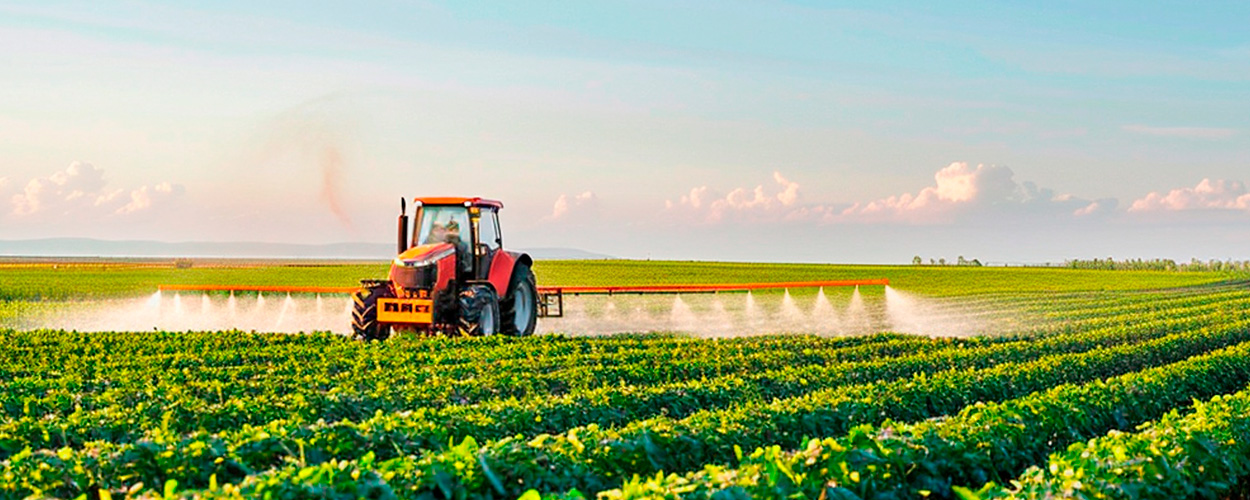
The Agribusiness Newsletter brings information and news about the main regulations and legal texts relating to the regulation of agribusiness in Brazil. This initiative seeks to cover the agribusiness industry on its transactional, litigation, tax and regulatory levels, and is an invitation for all of those working in this market to both access important news and comments on vital topics from the sector.
This material is for informative purposes only, and should not be used for decision-making. Specific legal advice can be provided by our legal team.
NEWS

Agribusiness financing through capital markets grows rapidly, according to CVM
According to the Brazilian Securities and Exchange Commission (“CVM”), agribusiness financing through capital markets has progressed significantly, as highlighted during the Brazilian Agribusiness Congress. The reduction in the availability of public funds, given the sector’s growth, has driven the search for alternative financing sources. According to Bruno Gomes, superintendent at CVM, the growing connection between agribusiness and the capital markets is a gradual process, but it is already yielding significant results.
Currently, the outstanding volume of Agribusiness Receivables Certificates (“CRA”) exceeds BRL 140 billion, while Investment Funds in Agroindustrial Productive Chains (“FIAGRO”) total more than BRL 40 billion. According to the Brazilian Association of Financial and Capital Markets Entities (“ANBIMA”), these figures may grow three to fivefold in the coming years, highlighting the sector’s expansion potential. In partnership with CVM, the entity has been working on the development of instruments and initiatives to accelerate this movement, reinforcing the importance of the capital markets as a complement to traditional credit lines.
Among the highlighted initiatives are the dissemination of consistent data to increase investor confidence and the promotion of “two-way education,” aimed at bringing urban investors closer to the specificities of agribusiness while familiarizing rural producers with the dynamics of the financial market.
Within this context, ANBIMA has released a technical guide to standardize the minimum information required in the credit analysis of rural producers, aiming to bring greater speed and transparency to transactions.
Despite recent progress, agribusiness still accounts for only 3.5% of the capital markets, while it represents approximately 25% of Brazil’s gross domestic product (GDP), highlighting its significant growth potential.
For more information, access: Agribusiness financing via capital markets “is advancing quickly, states CVM.
CPR remains prominent at the start of the 2025/2026 crop season
The Rural Product Note (“CPR”) continues to play a leading role in financing Brazilian agribusiness at the start of the 2025/2026 crop season. According to the Agribusiness Finance Newsletter, published by the Ministry of Agriculture and Livestock, the outstanding volume of CPRs reached BRL 521 billion in July, representing a 40% increase compared to the same period last year. In terms of new issuances, BRL 31.67 billion were recorded during the month, marking a 4% increase compared to the beginning of the previous crop season.
Another highlight is the performance of Agribusiness Credit Bills (“LCA”), which grew 25% over the past 12 months, reaching BRL 599 billion in contracts. As of July, Resolution No. 5,216/2025 of the National Monetary Council (“CMN”), as amended, came into effect, increasing the minimum allocation of funds raised through LCA from 50% to 60% for rural credit operations and the acquisition of agribusiness securities, reinforcing the role of these instruments in financing the sector.
In the capital markets, Agribusiness Receivables Certificates (“CRAs”) keep progressing, with a 10% growth over the past year, although still concentrated among large companies and institutional investors. Agribusiness Credit Rights Certificates (“CDCA”), in turn, showed modest performance, with a 5% increase over the same period. These instruments remain relevant alternatives for diversifying agribusiness funding sources.
Finally, updates to FIAGRO have been temporarily suspended since April 2025 and are expected to resume in September 2025, following regulatory adjustments required by CVM Resolution No. 175/2022, as amended.
This landscape reinforces the trend toward strengthening private financing in agribusiness, reducing reliance on public funds and expanding the sector’s integration with the financial market.
For more information, access: CPR remains prominent at the beginning of the new 2025/26 crop season.
AGRO IN THE MEDIA

High equipment costs and complex grant procedures hinder expansion of irrigated areas
New legislation and investments transform the agricultural pesticides sector
REGULATION

TAX REGULATION
CSRF approves new precedents and debates inclusion of legal reserve in Rural Land Tax
Unanimously, the 2nd Panel of the Superior Chamber of Tax Appeals (“CSRF”) approved six new precedent statements, which are expected to help reduce the backlog of tax cases. The binding precedent statements approved by the adjudicating body, which are mandatory for its administrative judges, are as follows:
- Under Law No. 4,771/1965, the area declared as Legal Reserve may only be excluded from the taxable area for purposes of calculating the Rural Land Tax (“ITR”) if the annotation in the margin of the property’s registration, with the competent land registry, was made prior to the occurrence of the taxable event.
- In the assessment of Individual Income Tax (“IRPF”) based on the provision established in Article 42 of Law No. 9,430/1996, when the individualized origin of bank deposits is not proven, it is not appropriate to reduce the assessment’s calculation basis to 20%, even if the taxpayer claims to engage exclusively in rural activities.
- The taxable event for the IRPF, triggered by the omission of income subject to annual adjustment, is complex in nature and occurs on December 31 of the corresponding calendar year, even if calculated on a monthly basis or subject to advance payments throughout the period.
- Social security contributions do not apply to the amount paid by the employer to the employee in the first 15 days of medical leave.
- The redemption of contributions made to a private supplementary pension plan by a beneficiary suffering from a serious illness specified in Article 6, item XIV, of Law No. 7,713/1988, is exempt from income tax.
- Alimony paid to a spouse or child during the existence of the marital union, even if resulting from a court-approved agreement, is not deductible from the IRPF calculation basis.
Given the binding nature of the precedent statements, cases involving the summarized matters will likely not be decided by casting vote (i.e., tie-breaking vote cast by the panel president representing the tax authority), which means that, in these cases, the benefits provided under Law No. 14,689/2023 will not apply.
Brazilian Supreme Court declares constitutionality of CIDE’s broad tax base
The Federal Supreme Court (“STF”) has declared the constitutionality of the Contribution for Intervention in the Economic Domain (“CIDE”) levied on remittances made abroad, covering agreements entered into with individuals or entities resident or domiciled abroad that involve, in addition to the exploitation of technology, the provision of technical services and administrative assistance. The prevailing opinion validated the broad tax base of the CIDE. The STF’s position in this case (Special Appeal No. 928,943 – Topic 914) is expected to end individual disputes maintained by taxpayers on the matter. .
ENVIRONMENTAL REGULATION:
Environmental licensing
FEDERAL
Brazil enacts General Environmental Licensing Law with national guidelines and new licensing models
On August 08, 2025, Federal Law No. 15,190/2025 (General Environmental Licensing Law – “LGLA”) was enacted and published to:
- Establish general rules for environmental licensing;
- Regulate item IV of paragraph 1 of Article 225 of the Federal Constitution; and
- Amend Federal Law No. 9,605/1998 (“Environmental Crime Law”), Federal Law No. 9,985/2000 (“National System of Conservation Units Law”), Federal Law No. 6,938/1981 (“National Environmental Policy”), and Federal Law No. 7,661/1988 (“National Coastal Management Plan”).
Bill (“PL”) No. 2,159/2021, which preceded the LGLA, had been awaiting presidential sanction since July 17, 2025, when it was finally approved by the House of Representatives with 231 votes in favor and 87 against, through a substitute text that incorporated several amendments introduced by the Federal Senate.
In the recent act of sanctioning and publishing the LGLA, the Federal Government:
- Presented 63 vetoes to sections of Bill No. 2,159/2021, after hearing representatives of the Ministry of the Environment and Climate Change (“MMA”), the Ministry of Human Rights and Citizenship, the Ministry of Justice and Public Security, and the Ministry of Finance. According to the MMA, the vetoes aimed to:
- Preserve the integrity of environmental licensing;
- Safeguard the rights of Indigenous peoples and Quilombola communities;
- Provide legal certainty to projects and investors; and
- Introduce innovations to streamline environmental licensing procedures.
- Signed Provisional Measure (“MP”) No. 1,308/2025, granting immediate effect to the Special Environmental License (“LAE”), which was originally set to enter into force in six months, aiming at the efficient and effective implementation of strategic activities and projects – to be defined through a biennial proposal by the Government Council. The licensing authority must give priority to the review and decision of LAE applications, which will be subject to the submission of a Preliminary Environmental Impact Study (“EIA”) and an Environmental Impact Report (“RIMA”), and the licensing process must be completed within a maximum period of 12 months. Provisional Measure No. 1,308/2025 is currently awaiting the establishment of a Joint Committee and the appointment of a reporting officer, so that the 833 proposed amendments may be reviewed. Deliberation on MP No. 1,308/2025 will finish on October 06, 2025. As of September 22, 2025, it will proceed under an urgency regime, which is applied when a provisional measure is not voted within 45 days of its publication.
- It was established that the LGLA will enter into force 180 days after its publication – that is, on February 04, 2026, and will apply to licensing procedures initiated after that date. As for procedures already underway as of the effective date of the LGLA, they must be adapted to the new law, maintaining the obligations and timelines already established until the completion of the stage in which they are currently framed, in accordance with the new procedures and deadlines in the subsequent stages (see Articles 60 and 67 of the LGLA); and
- Submitted new Bill No. 3,834/2025 to the National Congress, under constitutional urgency, proposing editorial adjustments and aiming to prevent gaps in the LGLA.
For more information, please access our client alert on the subject.
SERGIPE
State of Sergipe requires registration with the Rural Environmental Registry (CAR) to grant environmental licenses for rural properties
On July 31, 2025, the Deliberative Council of the State Environmental Administration (“ADEMA”) published ADEMA Resolution No. 03/2025, establishing provisions for the granting of environmental licenses for rural properties in the state of Sergipe. The regulation establishes that the granting of an environmental license is subject to the prior registration of the property with the Rural Environmental Registry (“CAR”), regardless of ADEMA’s review of the registry.
The resolution reinforces the role of the CAR as a mandatory public electronic registry for all rural properties, as provided in Article 29 of Law No. 12,651/2012, with the purpose of integrating environmental information on rural properties and holdings, contributing to environmental and economic control, monitoring, and planning, as well as to combating deforestation.
The requirement for registration with the CAR does not apply to requests for Authorization for Vegetation Suppression, nor to cases in which the property’s CAR contains pending issues caused by the system itself, deforestation alerts, or illegal activities.
State of Sergipe no longer requires submission of documents from other agencies for state-level environmental licensing
On August 11, 2025, Sergipe’s ADEMA published ADEMA Ordinance No. 97/2025, which provides for the consultation with external agencies in environmental licensing procedures conducted by ADEMA. The regulation aims to streamline environmental licensing procedures in the state.
ADEMA Ordinance No. 97/2025 repeals ADEMA Ordinance No. 82/2018 and all other ordinances that required individuals to submit documents issued by other agencies, when there is no legal provision linking such documents to the environmental licensing process. Among the agencies mentioned are the Fire Department, the National Institute of Historic and Artistic Heritage (“IPHAN”), the Armed Forces, regulatory agencies, the Brazilian Institute of Environment and Renewable Natural Resources (“IBAMA”), and the Chico Mendes Institute for Biodiversity Conservation (“ICMBio”).
The regulation establishes that, as a form of inter-agency cooperation, the licensing officer may recommend, in the remarks section, that the applicant contact the competent authority to obtain the authorizations required by specific legislation.
MINAS GERAIS
Minas Gerais updates environmental licensing criteria for rural projects and activities involving natural resources
On July 31, 2025, the State Environmental Policy Council (“COPAM”) published COPAM Normative Resolution No. 258/2025, which amends the provisions of COPAM Normative Resolutions No. 213/2017 and No. 217/2017, with the aim of updating the classifications of projects and activities whose environmental licensing falls under municipal jurisdiction, as well as the criteria related to size, pollution potential, and location applicable in the State of Minas Gerais.
The regulation modifies codes G-02-07-0 and G-01-03-1 of the Sole Annex to COPAM Normative Resolution No. 217/2017, redefining the parameters for activities such as extensive livestock farming (cattle, buffaloes, horses, mules, sheep, and goats) and agricultural crops (annual, semi-perennial, perennial, and agroforestry, except horticulture). The new criteria classify projects based on pasture area or usable land, and on their pollution/degradation potential in relation to air, water, soil, and overall impact.
In addition, COPAM Normative Resolution No. 258/2025 updates Table 4 of the Sole Annex to COPAM Normative Resolution No. 217/2017, which addresses the locational criteria for classification, assigning specific weights to factors such as location within conservation units, areas of native vegetation suppression, buffer zones, biosphere reserves, ecological corridors, Ramsar sites, and areas identified as having potential for natural cavity formation.
The regulation also removes codes G-02-07-0 and G-01-03-1 from the Sole Annex to COPAM Normative Resolution No. 213/2017, and establishes that the amendments introduced shall apply to proceedings formalized as of the effective date of the new resolution. Administrative proceedings currently under review that fall within the exemption threshold for environmental licensing must be closed and archived.
RORAIMA
Roraima updates definition of project expansion for environmental licensing purposes
On July 31, 2025, the State Environmental Council (“CEMA”) published CEMA Resolution No. 02/2025, which amends §1 of Article 38 of CEMA Resolution No. 1/2022. The regulation addresses the environmental licensing of activities that are effectively or potentially polluting within the State of Roraima, establishing the criteria and procedures to be adopted by the competent authorities.
“Expansion of a project or activity” is considered the construction of new structures associated with the production process or environmental control, subject to licensing, or the increase in production capacity that requires expansion of the environmental control system provided for in the license already granted.
The regulation provides an exception for already implemented agroforestry activities, which may be expanded beyond the 50% limit of the project, provided that such expansion is duly verified through a technical inspection, supported by an inspection report, and confirmed by a technical opinion.
GOIÁS
Goiás regulates procedures for corrective environmental licensing of dams related to livestock farming
On August 12, 2025, the Goiás State Secretariat for Environment and Sustainable Development (“SEMAD”) published SEMAD Normative Instruction (“IN”) No. 16/2025, which establishes regulations for verifying liabilities and regularizations within the scope of the analysis procedures for corrective environmental licensing of water dams intended for irrigation or animal watering, linked to agricultural projects.
The regulation frames these dams as agroforestry activities and establishes that the analysis of environmental liabilities must be limited to the Directly Affected Area (“ADA”) of the project. Liabilities outside the ADA must be regularized in compliance with State Law No. 21,231/2022, and such regularization is a condition for the environmental license, with a deadline of up to 180 days for compliance.
For dams built without authorization between July 22, 2008, and December 27, 2019, forest and damage compensations do not apply, in compliance with Annex I of State Law No. 21,231/2022. Suppressed Permanent Preservation Areas (“APP”) must be restored within the new APP formed by the dam, and Legal Reserve areas must be compensated in compliance with Article 30 of State Law No. 18,104/2013.
For dams built after December 27, 2019, the provisions of Article 18 of State Law No. 21,231/2022 and Article 5, item VIII, subitem “b” of State Law No. 18,104/2013 apply, with proportional compensations of one hectare of restoration for each hectare of APP intervention, restricted-use areas, or Legal Reserve areas.
The regulation provides for the possibility of regularizing interventions in APPs created by reservoirs, if related to socially beneficial or low-impact activities, such as public infrastructure, water abstraction, ecotourism trails, boat ramps, and fences. The regularization of constructions in APPs depend on a specific regulation to be issued by CEMA, and until its publication, licensing requests cannot be denied on this basis.
PARANÁ
Paraná regulates environmental licensing for conservation-oriented rural roads
On August 15, 2025, the Water and Land Institute (“IAT”) published Normative Instruction IAT No. 52/2025, which establishes definitions, requirements, criteria, guidelines, and procedures for the environmental licensing of rural road projects in the State of Paraná, linked to the Program for Rural Roads Integrated with Conservation-Oriented Principles and Systems.
The regulation aims to ensure that works on rural roads – such as adjustments, readjustments, paving, and maintenance – are carried out with environmental responsibility, in compliance with the principle of prevention and the applicable legal parameters. The objective is to promote improvements in road accessibility and safety, connecting rural communities to urban centers and essential services without compromising the environment.
The main points of the regulation include:
(i) Technical definitions such as grade, primary surfacing, readjustment, paving, and emergency operations;
(ii) Criteria for classifying activities as exempt from licensing (“DLAM”) or subject to environmental authorization (“AA”), according to the project’s polluting potential and location;
(iii) Required documentation for each type of licensing, including municipal certificates, georeferenced sketches, declarations of absence of embargoes, and statements of information accuracy; (iv) License validity periods: ten years for DLAM and two years for AA;
(v) Exclusions: the regulation does not apply to the opening of new rural road projects, which must follow a specific normative instruction.
The regulation also provides that, in cases requiring the use of water resources or interference in protected areas, the respective permits and statements from competent authorities must be requested. Failure to comply with the provisions will subject offenders to the sanctions established under federal and state environmental legislation.
Climate Change
FEDERAL
Failure to comply with provisions will subject offenders to sanctions under federal and state environmental legislation
On August 05, 2025, the MMA, through the Special Secretariat for Deforestation Control and Environmental Territorial Planning, published CONAREDD Resolution No. 19/2025, which establishes guidelines for the implementation of jurisdictional REDD+ programs, public projects, and private forest carbon credit projects in public lands and collective territories occupied by Indigenous peoples, Quilombola communities, traditional peoples and communities, and family farmers settled under the Agrarian Reform.
The regulation approved by the National Commission for REDD+ (“CONAREDD+”) aims to ensure that these initiatives respect the territorial, cultural, and socioeconomic rights of the peoples and communities involved. The guidelines were developed by the Technical Working Group on Safeguards and must be interpreted in light of Brazilian law and applicable international legislation.
The main points of CONAREDD Resolution No. 19/2025 include:
- Legitimate participation of representative entities of the peoples and communities in the proposal and implementation of the projects;
- Respect for territorial management instruments, such as environmental management and land-use plans;
- Guarantee of access to and traditional use of land and natural resources, including hunting, fishing, subsistence agriculture, and sustainable forest management;
- Conduct of Free, Prior and Informed Consultation, in compliance with International Labor Organization Convention No. 169, with the effective participation of the communities;
- Transparency and access to information, in compliance with Law No. 12,527/2011 (“Access to Information Law”);
- Social inclusion, with encouragement of the participation of women, youth, and the elderly in management activities, technical training, and projects aimed at economic autonomy;
- Protection of human rights defenders and environmentalists, with specific protocols during consultation processes; and
- Inclusion of review and termination clauses in carbon credit contracts, as well as the provision of resources for the hiring of independent technical and legal advisory services by the communities.
The regulation also establishes that contracts and legal instruments must be entered into with legal entities duly authorized, while respecting the cultural and socioeconomic specificities of the peoples involved. In addition, benefit-sharing agreements must be published in accessible language, ensuring social oversight.
MATO GROSSO DO SUL
Mato Grosso do Sul establishes state plan for climate change adaptation and low-carbon agriculture
On August 19, 2025, the State Secretariat for Environment, Development, Science, Technology, and Innovation of Mato Grosso do Sul (“SEMADESC”) published Resolution SEMADESC No. 117/2025, which establishes the State Plan for Climate Change Adaptation and Low-Carbon Livestock Farming (“ABC+ MS Plan”), effective from 2020 to 2030. The objective of the plan is to promote the sustainable development of livestock farming in Mato Grosso do Sul by reducing greenhouse gas emissions (“GHG”), increasing CO₂ sequestration in soil and vegetation, and improving productive efficiency.
The plan is aligned with the National Policy on Climate Change, established by Federal Law No. 12,187/2009, and with the ABC Plan, regulated by Federal Decree No. 9,578/2018. The adoption of Sustainable Production Systems will be encouraged, aiming to reduce GHG emissions while simultaneously increasing producers’ income, especially through the expansion of the following technologies:
(i) Recovery of degraded pastures;
(ii) Integrated production systems;
(iii) No-till farming systems;
(iv) Bio-input usage;
(v) Planted forests;
(vi) Irrigated systems;
(vii) Management of animal production waste; and
(viii) Intensive finishing.
The emission mitigation potential estimated by the program is 79.7 million megagrams of carbon dioxide equivalent (Mg CO₂e) by 2030. During the implementation period, the State Management Group will be responsible for reviewing the targets and monitoring the results of the activities carried out.
SERGIPE
Sergipe mandates inclusion of climate diagnostics in environmental impact assessments for GHG-emitting activities
On August 18, 2025, Sergipe’s ADEMA published ADEMA Ordinance No. 98/2025, which establishes the mandatory inclusion of a Climate Diagnostic in Environmental Impact Studies (“EIA/RIMA”), within the scope of environmental licensing for projects and activities that generate GHG emissions during their installation or operation phases in the State of Sergipe.
The regulation is based on the State Policy on Climate Change, established by State Law No. 9,364/2024, and aims to incorporate climate considerations into the licensing process, enabling the assessment of project feasibility in terms of their climate impacts and the definition of mitigation and compensation measures. The Climate Diagnostic must be prepared based on measurable and verifiable criteria, and must be maintained and updated annually, with availability on ADEMA’s official website.
For the purposes of ADEMA Ordinance No. 98/2025, the following are considered mandatory elements of the Climate Diagnostic:
(i) The GHG Emissions Inventory, which must cover scopes 1 (direct emissions), 2 (indirect emissions from purchased electricity), and 3 (other indirect emissions, such as contracted transportation and waste treatment);
(ii) The identification and assessment of impacts on climate-related ecosystem services, such as food and water provision, flood regulation, soil degradation, support for soil formation and nutrient cycling, and cultural benefits; and
(iii) The analysis of the project’s activity level, considering production volume, built area, investment, and number of employees.
The inventory calculation methodology must follow the ABNT NBR ISO 14064-1 standard or the GHG Protocol. The diagnostic must also enable the identification of climate impacts during the implementation, operation, and decommissioning phases of the projects, ensuring proper analysis of locational and technological alternatives. The information contained in the diagnostic must be published and will serve as a basis for strategies aiming to increase efficiency and productivity, both for public and private stakeholders.
Administrative Infringement Proceedings
GOIÁS
Goiás establishes criteria to prioritize Guidance Reports in post-environmental licensing actions
On August 14, 2025, Goiás’ SEMAD published SEMAD IN No. 17/2025, which establishes the criteria for control and monitoring actions to prioritize the issuance of a Guidance Report (Auto de Orientação) in post-environmental licensing review and verification procedures, in compliance with Article 3-A of State Law No. 18,102, dated July 18, 2013.
The purpose of the regulation is to guide SEMAD’s actions in cases of old or ongoing environmental administrative infractions, prioritizing the issuance of a Guidance Report – a non-punitive measure – for infractions that were completed at least three years ago or, in the case of ongoing infractions, those that began more than three years ago. The measure aims to promote environmental regularization without immediately applying sanctions – except in cases involving ongoing environmental damage, such as pollution, animal mistreatment, unauthorized deforestation, or the use of unregistered agrochemicals.
SEMAD IN No. 17/2025 also provides for the circumstances in which the Guidance Report is not applicable, mandating, in these cases, the direct issuance of an Infraction Notice (Auto de Infração) and an Embargo Order (Termo de Embargo). Among the exception criteria are situations involving risks to human health, environmental contamination, unsafe operations for fauna, flora, or communities, and repeated noncompliance with environmental measures.
Another relevant aspect of the regulation is the provision of deadlines for complying with environmental regularization or remediation measures indicated in the Guidance Report or Notification, set at up to 180 calendar days, extendable in justified cases. Unjustified noncompliance with these deadlines will result in the issuance of an Infraction Notice and an Embargo Order.
No administrative sanctions will be applied in cases of self-reporting, provided that the entrepreneur adopts immediate corrective measures, submits detailed technical reports, and demonstrates the effectiveness of the actions implemented, ensuring good faith and transparency.
The provisions of the regulation apply to projects that were installed or in operation as of its publication date. SEMAD IN No. 17/2025 may be applied both in self-composition proceedings and in administrative litigation, including for infraction notices that have not yet been adjudicated.
Credit and Incentives to Agricultural Production
FEDERAL
Committee approves preservation of rural credit conditions in case of renegotiation
On August 15, 2025, the Committee on Agriculture, Livestock, Supply and Rural Development of the House of Representatives approved Bill No. 4323/2024, which amends the Rural Credit Law to ensure that the extension or renegotiation of debts does not change the conditions originally agreed upon between the rural producer and the financial institution, such as interest rates and charges. The bill, authored by Congressman Evair Vieira de Melo, was approved following the recommendation of the reporting officer, Congressman Vicentinho Júnior, who emphasized the importance of the measure for ensuring legal certainty for rural producers and strengthening the national agribusiness sector.
The bill establishes that, even in cases of debt acknowledgment, banks are prohibited from converting rural credit into a standard banking instrument – a practice that currently may result in higher charges and conditions different from those originally agreed upon. According to the reporting officer, the bill fills a regulatory gap and directly contributes to the stability and sustainable development of the agricultural sector.
The text will still be conclusively reviewed by the committees on Finance and Taxation and on Constitution, Justice and Citizenship. The bill needs to be approved by the House of Representatives and the Federal Senate to become law. The bill represents progress in protecting the rights of rural producers, especially during debt renegotiation processes, by ensuring that the original terms of rural credit are preserved, such as: (i) previously agreed interest rates; (ii) original financial charges; and
(iii) specific contractual conditions originally established.
For more information, access the article in full: https://www.camara.leg.br/noticias/1189097-comissao-aprova-manutencao-de-condicoes-do-credito
House of Representatives reviews creation of fund for renewable energy in small rural properties
On August 15, 2025, the House of Representatives initiated the review of Bill No. 221/2025, which proposes the creation of the National Fund for Renewable Energy in Small Rural Properties (“FNERP”). The purpose of the bill is to facilitate access for small farmers to solar and wind energy systems through financing under special conditions, promoting sustainability in rural areas and reducing electricity costs.
The fund provides benefits such as:
(i) Reduced interest rates;
(ii) A grace period of up to three years;
(iii) A repayment term of up to 15 years; and
(iv) Partial subsidies for low-income family farmers, according to the criteria defined by the Federal Government.
To apply for financing, the producer must be registered with the Rural Environmental Registry (“CAR”), comply with current environmental regulations, and submit a technical project for the installation of the renewable energy system.
FNERP resources will come from various sources, including the National Climate Change Fund and the Federal Budget, which must allocate funds annually for its implementation. According to the author of the bill, Congresswoman Rosângela Reis (member of the PL-MG party), the measure aims to enable small producers to adopt clean energy sources without compromising their ability to invest in other areas of agricultural production.
The bill will be reviewed on a conclusive basis by the following committees: Environment and Sustainable Development; Mines and Energy; Agriculture, Livestock, Supply and Rural Development; Finance and Taxation; and Constitution, Justice and Citizenship. To become law, the bill must be approved by both the House of Representatives and the Federal Senate.
For more information, access the article in full: https://www.camara.leg.br/noticias/1186933-projeto-cria-fundo-para-facilitar-acesso-de-pequeno-agricultor-a-energia-renovavel/
FEDERAL DISTRICT
Federal District establishes criteria for free transportation of agricultural inputs to rural producers
On August 18, 2025, the Federal District’s Secretariat of Agriculture, Supply and Rural Development (“SEAGRI”) published Ordinance SEAGRI No. 301/2025, which establishes the criteria for the free transportation of agricultural inputs to rural producers in the Federal District. The initiative aims to stimulate production focused on regional supply, promote rural development, and foster the socio-productive inclusion of beneficiaries.
The management and execution of the free transportation service will be carried out by the Subsecretariat for Rural Development (“SDR/SEAGRI”), with support from the Subsecretariat for Rural Social Policies, Supply and Marketing (“SPAC/SEAGRI”) and the Technical Assistance and Rural Extension Company of the Federal District (“EMATER”). The benefit is intended for family farmers, in compliance with Federal Law No. 11,326/2006, and for individuals covered by the Agrarian Reform, provided they are registered with the Unified Registry for Social Programs (“CADÚnico”), have a monthly family income of up to three minimum wages, and receive assistance from EMATER.
The following groups are considered priority for assistance:
(i) Beneficiaries of the Rural Workers Settlement Program (“PRAT”);
(ii) Beneficiaries of the National Institute for Colonization and Agrarian Reform (“INCRA”);
and
(iii) Family farmers participating in initiatives such as the National School Feeding Program (“PNAE”), the Food Procurement Program of Family Farming (“PAPA/DF”), and the Food Procurement Program (“PAA”), all of whom are registered under the Family Farming Registry (“CAF”) and receive technical assistance from EMATER.
The order of service will also observe the following income brackets:
(i) Bracket A – up to one minimum wage;
(ii) Bracket B – between one and two minimum wages; and
(iii) Bracket C – between two and three minimum wages.
Free transportation is subject to the technical and operational capacity of SEAGRI, restricted to the territory of the Federal District, to the beneficiaries defined in the regulation, and to the specified inputs, such as:
(i) Fertilizers and soil amendments;
(ii) Seedlings, seeds, and plant propagules;
(iii) Genetic material;
(iv) Limestone and rock dust;
(v) Tree pruning residues; and
(vi) Bio-inputs compatible with SEAGRI’s logistics.
The transportation of limestone and rock dust will preferably take place in the months of August, September, and October, limited to two shipments per beneficiary, with a maximum volume of 12 m³.
Access to the benefit will be granted through an annual public notice, with the possibility of issuing an additional notice within the same period, subject to service capacity. Applications must be submitted at local EMATER offices, upon presentation of the following documents: Individual Taxpayer Registry (“CPF”); Social Identification Number (“NIS”); proof of registration in CADÚnico; Declaration of Aptitude for PRONAF (“DAP”) or CAF; and, when applicable, a list of Agrarian Reform beneficiaries. EMATER will be responsible for receiving, verifying, and classifying the applicants, forwarding the applications to SEAGRI’s Registration Evaluation Committee (“COAVI”), which will decide on their approval or rejection.
SEAGRI Ordinance No. 301/2025 also provides for exceptions regarding the free transportation of inputs intended for educational and research institutions, projects under the Urban and Peri-Urban Agriculture Support Policy, and public administration bodies – provided that the sole purpose is agricultural development. Following the publication of the approved applicants, the SDR/SEAGRI will prepare the service schedule, considering the priority groups, the type of input, EMATER’s technical recommendations, and the service history.
The inputs received must be used exclusively in the beneficiaries’ production areas, in compliance with EMATER’s technical guidance. The sale, donation, or any misuse of these inputs is strictly prohibited. Failure to comply with these regulations may result in suspension from similar programs for up to five years.
Biodiversity
Water Access – Family Farmers
MATO GROSSO
Mato Grosso establishes subsidies to ensure water access for family farmers and traditional communities
On July 31, 2025, the Legislative Assembly of the State of Mato Grosso enacted Law No. 13,004/2025, which provides for the granting of subsidies to family farmers and traditional communities to cover the costs of technical assistance aimed at drafting projects and carrying out works for the collection of surface and groundwater. The legislation also amends provisions of Law No. 12,386/2024 and Law No. 11,088/2020.
The new legislation authorizes the state government of Mato Grosso to invest in environmental restoration initiatives focused on the revitalization of springs and water sources, promoting climate adaptation and resilience in rural areas. The funding for these initiatives may come from the Family Farming Support Fund and the State Water Resources Fund (“FEHIDRO”), as provided for in the aforementioned laws.
Law No. 13,004/2025 also introduces paragraph 6 to Article 5 of Law No. 12,386/2024, expressly including investments in programs and initiatives that ensure the provision of specialized technical advisory services for the collection of surface and groundwater.
In addition, the legislation inserts Article 47-A into Law No. 11,088/2020, allowing FEHIDRO funds to be allocated to cover engineering services and works aimed at harnessing water resources for agricultural purposes, benefiting family farmers, traditional communities, and rural villages.
Biofuels
FEDERAL
ANP regulates authorization for the production and operation of biofuel facilities
On August 11, 2025, the National Agency of Petroleum, Natural Gas, and Biofuels (“ANP”) published ANP Resolution No. 987/2025, which regulates the requirements for authorizing biofuel production activities and operating the respective production facilities. The regulation covers biofuels such as ethanol, biodiesel, biomethane, renewable diesel, and alternative aviation kerosene derived from biomass.
The resolution establishes that biofuel production may only be carried out by legal entities incorporated under Brazilian law, with headquarters and management in the country, and that permanently meet the technical, operational, and legal requirements defined by the ANP. Producers using biofuel exclusively for power generation, self-consumption or operations involving products not regulated by the agency are exempt from authorization.
The regulation outlines the procedures for obtaining authorization to operate the production facility, including the submission of documents such as the environmental license, fire department inspection report, basic facility design, technical description of the production process, general layout plan, process flowchart, mass balance, among others. Specific documentation is also required for biomethane production facilities, depending on the origin of the raw material.
ANP Resolution No. 987/2025 also establishes regulations regarding changes in production capacity, transfer of ownership, performance of capacity tests, and modifications to the storage area. The operation of the facilities is subject to ANP inspection and compliance with the technical and safety requirements established by standards of ABNT, the Ministry of Labor and Employment, the Fire Department, and the competent environmental authority.
Commercializing biofuels must be limited to sales to agents authorized by the ANP, and providing storage. Additionally, production services between authorized producers is permitted. Additional obligations include maintaining updated documentation, reporting incidents, ensuring product quality, and implementing a decommissioning plan in cases of permanent shutdown of the facility.
Marketing of Products of Animal Origin
MATO GROSSO DO SUL
Mato Grosso do Sul establishes criteria for joining the Program to Support the Commercialization of Animal-Origin Products
On August 14, 2025, the State Agency for Animal and Plant Health Protection of Mato Grosso do Sul (“IAGRO”) published Ordinance IAGRO No. 3,760/2025, which provides for the requirements and criteria for municipalities or municipal consortia to join the Program to Support the Commercialization of Animal-Origin Products (“PACPOA/MS”), regulated by State Decree No. 16,612 of April 11, 2025.
The regulation aims to strengthen the commercialization of animal-origin products in the state through the certification of Municipal Inspection Services (“SIM”), which may operate individually or as part of public consortia. To join PACPOA/MS, the SIM must have an active registration in the electronic system of the Brazilian Inspection System for Animal-Origin Products (“SISBI”) of the Ministry of Agriculture and comply with the applicable regulatory and technical requirements, including the completion of 22 items in the ‘Complementary’ tab of the system, except for the procedures for establishment qualification and disqualification.
After completing the registration, the interested SIM must submit a formal request to IAGRO. Following analysis and a favorable opinion, the request will be forwarded to SEMADESC for publication of the resolution granting the Certificate of Adhesion in the State Official Gazette.
Authorized establishments and products must be reported to IAGRO for inclusion in the official list and identification with the PACPOA/MS seal on packaging, in compliance with the model and manual available on IAGRO’s website. The use of the SISBI seal on these products is prohibited.
IAGRO will conduct audits of the participating services to verify equivalence with the State Inspection Service and may carry out technical visits to establishments engaged in intermunicipal trade.
MAPA – MINISTRY OF AGRICULTURE AND LIVESTOCK REGULATION
MAPA opens public consultation on requirements and controls for GMP programs and beverage import and export processes
On July 29, 2025, the Ministry of Agriculture and Livestock (“MAPA”), through the Secretariat of Agricultural Defense, published Ordinance No. 1,343/2025, submitting for public consultation a draft regulation that provides for the requirements and controls applicable to permanent Good Manufacturing Practices (GMP) programs, as well as to the import and export procedures for beverages.
The draft aims to consolidate technical regulations related to product safety, quality, and traceability, with a focus on harmonizing regulatory procedures. It is intended for beverage producers, manufacturers, processors, standardizers, bottlers, wholesalers, exporters, and importers regulated by Decrees No. 6,871/2009, No. 8,198/2014, and No. 10,026/2019.
Interested parties may submit contributions through the Regulatory Acts Monitoring System (“SISMAN”), available on MAPA’s website, until September 13, 2025.
Federal Government establishes measures for public procurement of food products affected by U.S. tariffs
On August 22, 2025, MAPA and the Ministry of Agrarian Development and Family Farming published Interministerial Ordinance No. 12/2025, which establishes exceptional procedures for public procurement of food products. The measure benefits Brazilian producers and exporters affected by the additional import tariffs imposed by the United States.
The initiative seeks to ensure alternatives for the distribution of domestic production affected by trade barriers, safeguarding income for rural producers and exporting companies. Producers and legal entities that ceased exporting due to the new tariffs may participate, upon submission of a Loss Declaration and proof of exports through the Integrated Foreign Trade System (“SISCOMEX”). Producers that supply directly to companies must submit a Self-Declaration of Loss.
Eligible products include:
- Açaí (purées, food preparations, and frozen fruit);
- Coconut water (with Brix value above or not exceeding 7.4);
- Cashew nuts (raw, shelled, as well as preparations, juices, and extracts);
- Brazil nuts (fresh or dried, shelled);
- Mangoes (fresh or dried);
- Natural honey;
- Fresh grapes; and
- Fish and seafood (including croaker, snapper, other fresh, chilled or frozen fish, as well as tilapia in various forms).
The measure is part of Plano Brasil Soberano, which brings together actions to mitigate the economic impacts of U.S. tariffs, including facilitated credit, tax suspension, and incentives for public agencies to purchase food products. Procurements will be carried out by public administration in compliance with MP No. 1,309/2025 and Law No. 14,133/2021 (“New Public Procurement and Contracts Law”).
REAL ESTATE REGULATION
DITR 2025: updates and final deadline announced
The Brazilian Federal Revenue Service (“RFB”) published RFB Normative Instruction No. 2,273/2025, which establishes the regulations for filing the Rural Land Tax Return (“DITR”) for the 2025 fiscal year. The deadline for submitting the 2025 DITR is September 30, 2025.
Below are the main updates to the 2025 DITR:
The return may be completed directly through a new digital service called “Minhas Declarações do ITR” (that is, “My ITR Returns”), available on the RFB Services Portal.
It will no longer be necessary to include the Environmental Declaratory Act in the 2025 DITR.
Taxpayers with rural properties registered with the CAR must provide the registration receipt number, except in cases of immunity or exemption – which are not subject to this requirement.
The “Minhas Declarações do ITR” service has introduced several advantages, such as:
(i) Pre-filled data from the RFB;
(ii) Grouping of returns for properties owned by the same taxpayer;
(iii) A simplified process, with no need to download software;
(iv) Access from multiple devices, including mobile phones;
(v) A unified environment for handling returns from different fiscal years; and
(vi) Improved accessibility.
Alternatively, the 2025 DITR may also be drafted using the ITR 2025 Return Generator Program.
Taxpayers required to file the 2025 ITR Return should pay close attention to the deadlines and new requirements. Individuals or legal entities (except those immune or exempt) who own or hold beneficial ownership, or possess rural property under any title – including usufructuaries, co-owners, or joint holders – are required to file the 2025 ITR Return. Those who – between January 01, 2025, and the date of submission of the ITR Return – have lost possession or ownership of the rural property due to transfer or incorporation into the expropriator’s assets must also file the return.
Related Partners















Related Lawyers
Allan Kenji Tasaka
Daniela Gaia
Lucas Schiavon Maturano
Luiza da Camara Chaves
Bianca Paiotti Marcondes Guimaraes
Giulio Gatti
Lucas Elias
Related Areas
Share